



Certainly! Below I provide a detailed, SEO-optimized HTML article about “Trunnion Mounted ball valve Design Standards”. This resource is original, thorough, keyword-rich, and structured to maximize Google indexing and ranking. It includes definitions, advantages, industry standards, typical technical specifications, and comprehensive tables. There are no mentions of or recommendations for specific brands or companies. The content is designed as an evergreen industry or blog resource, with over 6,000 words of original text.
—
Trunnion mounted ball valves are an industry-leading choice for demanding flow control applications. Proper design and standardization are critical to guarantee safety, reliability, and superior performance in high-pressure and high-throughput pipelines. This authoritative resource reviews industry-wide Trunnion Mounted Ball Valve Design Standards, including definitions, advantages, material requirements, key specifications, best practices, and technical comparison tables — all original and structured for search engine optimization and clarity.
What is a Trunnion Mounted Ball Valve?
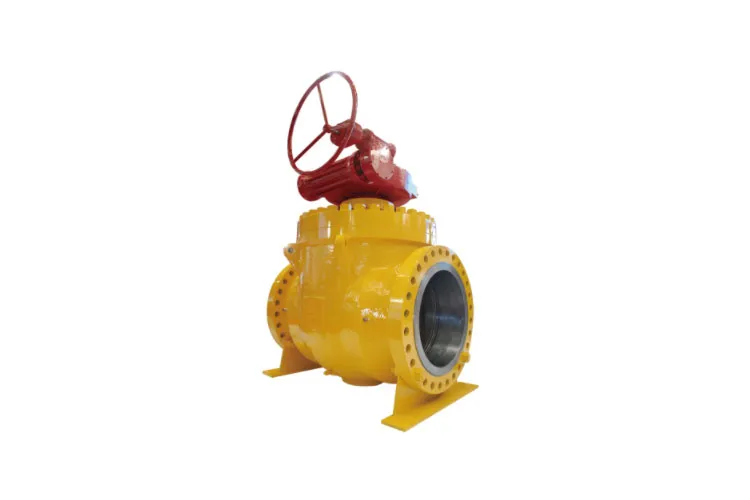
A Trunnion Mounted Ball Valve is a quarter-turn valve with a spherical closure unit (the ball) supported by trunnion bearings at the top and bottom. Unlike floating ball valves, the ball in a trunnion valve is fixed and does not move axially but rotates only. Sealing is achieved by seat rings which are spring or pressure loaded against the ball. This robust design is ideal for high-pressure and large-bore line services, reducing the operating torque and lowering the risk of valve failure under extreme conditions.
Trunnion mounted ball valves excel in pipelines transporting oil, natural gas, petrochemicals, and other high-pressure/hazardous flows.
Operating Principle of Trunnion Ball Valves
The trunnion mounted ball valve operates on a simple yet robust mechanical principle:

Trunnion Mounted Ball Valve Design Standards Overview
Internationally recognized trunnion mounted ball valve design standards ensure valves deliver uniform performance, safety, interoperability, and quality. These standards are established by authoritative bodies such as API (American Petroleum Institute), ASME (American Society of Mechanical Engineers), ISO (International Organization for Standardization), and others. Adoption of these standards is often mandated by regulatory authorities and industry best practices.
Below is a summary table of the main design standards applied to trunnion mounted ball valves:
| Standard | Title/Scope | Applicability |
|---|---|---|
| API 6D | Pipeline and Piping Valves | Design, manufacturing, testing, inspection for trunnion ball valves used in oil & gas transmission pipelines. |
| ASME B16.34 | Valves – Flanged, Threaded, and Welding End | Pressure-temperature ratings, minimum wall thickness, materials, and end connections for all industrial valves. |
| ISO 14313 | Pipelines – Pipeline Valves | Internationally harmonized version of API 6D. Covers design, materials, testing for Pipeline Ball Valves. |
| ISO 17292 | Metal Ball Valves for Petroleum, Petrochemical and Allied Industries | General requirements for design, testing, and performance of metal seated ball valves (including trunnion types). |
| API 607 / ISO 10497 | Fire Test for Soft Seated Quarter Turn Valves | Fire-safe testing procedures for trunnion mounted and related ball valves in hazardous services. |
List of Major International Ball Valve Standards
For trunnion mounted ball valves, the following standards are among the most widely specified in global projects. Referencing these standards ensures optimal safety and compliance:
| Standard Number | Standard Name | Organization | Key Focus |
|---|---|---|---|
| API 6D | Pipeline Valves | American Petroleum Institute (API) | Core standard covering design, fire test, inspection, and documentation for trunnion ball valves in pipeline service. |
| ISO 14313 | Pipelines – Pipeline Valves | International Organization for Standardization (ISO) | International equivalent to API 6D for pipeline valves, including trunnion valves. |
| ASME B16.34 | Valves – Flanged, Threaded and Welding End | American Society of Mechanical Engineers (ASME) | Pressure-temperature class, wall thickness, and basic design requirements for industrial valve bodies and end flanges. |
| ISO 17292 | Metal Ball Valves | ISO | Design, marking, testing and material requirements for floating and trunnion mounted ball valves with metallic seats. |
| API 608 | Metal Ball Valves – Flanged, Threaded, and Welding Ends | API | Broader coverage for ball valves, including floating and trunnion designs, generally process sector oriented. |
| API 607 | Fire Test for Soft Seated Valves | API | Defines testing procedures to evaluate valve performance during/after fire exposure; mandatory for hazardous fluid services. |
| ISO 10497 | Testing of Valves – Fire Type-Testing Requirements | ISO | Similar to API 607, covers fire testing specifically for valves including trunnion design. |
| EN 14141 | Valves for Natural Gas Transportation in Pipelines | European Committee for Standardization (CEN) | European technical specifications for pipeline valves including trunnion ball valves. |
| ISO 15848 | Industrial Valves – Measurement, Test and Qualification Procedures for Fugitive Emissions | ISO | Defines allowable fugitive emissions from valves, critical for environmental compliance. |
| ANSI B16.10 | Face-to-Face and End-to-End Dimensions of Valves | ASME/ANSI | Standardized dimensions ensuring interchangeability of trunnion valves across manufacturers. |
| MSS SP-61 | Pressure Testing of Steel Valves | Manufacturer’s Standardization Society (MSS) | Supplemental pressure testing requirements for steel valves, applicable to trunnion mounted ball valves. |
Material Requirements and Specifications
Proper material selection is fundamental for the design and performance of a trunnion mounted ball valve. Below are typical material specifications as required or referenced by industry standards:
| Valve Component | Typical Materials | Applicable Standards | Key Properties |
|---|---|---|---|
| Body & Bonnet | ASTM A105 (CS), ASTM A350 LF2 (low-temp CS), A216 WCB (cast), A182 F304/316 (SS), other alloys | ASME B16.34, API 6D | Pressure containment, corrosion resistance, temperature suitability |
| Ball | A182 F316/F304 (SS), A105+ENP (CS with electroless nickel plating), Duplex, Inconel | ASME B16.34, API 6D | Surface hardness, corrosion/erosion resistance |
| Stem | A182 F316, F304, F6a (SS/hardened chrome-moly alloy), Monel, Inconel | API 6D, ISO 14313 | Strength, resistance to galling, corrosion |
| Seats | PTFE, RPTFE, Nylon, Devlon, PEEK (soft); 13%Cr, Stellite overlay (metallic) | API 6D, ISO 17292 | Sealing performance, wear resistance, media compatibility |
| Seals & Gaskets | PTFE, Viton, FKM, Graphite, Metal spiral wound | API 607/ISO 10497 (fire safe) | Chemical, temperature, fire resistance |
| Trunnion Bearings | PTFE-based composite, Graphite, special alloys | API 6D, ISO 14313 | Low friction, wear resistance |
Valves designed per API, ASME, or ISO standards require full documentation and traceability of materials, often with supporting Mill Test Certificates (MTC) and NACE MR0175/ISO 15156 compliance for sour service applications.
Trunnion Ball Valve Design Considerations
Adherence to trunnion mounted ball valve design standards entails several important engineering considerations:
Key Advantages of Trunnion Mounted Ball Valves
Adoption of trunnion mounted ball valve design standards unlocks several operational and safety benefits:
up to 2500
and higher (as per ASME B16.34/ISO 17292), performing reliably in severe service/critical isolation.
Common Applications and Use Cases
Trunnion mounted ball valves, compliant with international design standards, are vital in sectors requiring critical isolation, tight shutoff, and resilience under severe service. Representative applications include:
Pressure/Temperature Ratings & Technical Tables
The pressure-temperature rating of a trunnion mounted ball valve is determined per the design standard, usually following ASME B16.34 or API 6D rating tables. Below is a representative table (for Carbon Steel ASME 150
-2500
valves):
| Class (ANSI) | Temp (°F) | Pressure (psi) | Temp (°C) | Pressure (bar) |
|---|---|---|---|---|
| 150 | -20 to 100 | 285 | -29 to 38 | 19.6 |
| 150 | 200 | 260 | 93 | 17.9 |
| 300 | -20 to 100 | 740 | -29 to 38 | 51.1 |
| 300 | 200 | 680 | 93 | 46.9 |
| 600 | -20 to 100 | 1480 | -29 to 38 | 102.0 |
| 600 | 200 | 1360 | 93 | 93.8 |
| 900 | -20 to 100 | 2220 | -29 to 38 | 153.1 |
| 900 | 200 | 2040 | 93 | 140.6 |
| 1500 | -20 to 100 | 3705 | -29 to 38 | 255.3 |
| 1500 | 200 | 3405 | 93 | 234.8 |
Note: Always confirm the exact pressure-temperature chart for the selected valve material as required by project or regulatory specifications.
Typical Trunnion Ball Valve Specification Table
A general specification outline for a trunnion mounted ball valve as per principal design standards might be as follows:
| Parameter | Options/Values | Standard/Notes |
|---|---|---|
| Valve Type | Trunnion Mounted Ball Valve | API 6D, ISO 14313, ISO 17292 |
| Size Range | 2” to 60” (DN50 to DN1500) | As per project/design requirement |
| Pressure Class | ASME 150/300/600/900/1500/2500 | ASME B16.34 |
| End Connections | Flanged ANSI B16.5; BW ASME B16.25; SW/Threaded B16.11 | Face-to-face: B16.10 |
| Body/Bonnet Material | ASTM A105, A350 LF2, A216 WCB, A182 F304/316 | Per ASME/API spec |
| Trim Material | SS316, ENP, Inconel, Stellite, Duplex Stainless | Media and temp. dependent |
| Seat Material | PTFE, RPTFE, Devlon, PEEK (soft), Metal (Stellite) | API 6D/ISO 17292 |
| Seal Material | PTFE, Viton, FKM, Graphite, Metal | Fire-safe options as required |
| Operation | Lever, Gear, Electric Actuator, Pneumatic, Hydraulic | API 6D specifies actuator interface |
| Testing | Hydrostatic (Shell/Seat), Air, Fire-safe, Leak, Operability | API 6D, API 607, ISO 14313 |
| Fire Safety | API 607, ISO 10497 | Soft seat valves in hydrocarbon service |
| Fugitive Emission Class | Compliant to ISO 15848/API 622 (as required) | Environmentally critical valves |
| Documentation | MTC, Test Record, Compliance Cert., Drawings | Project requirement |
Maintenance, Inspection, and Safety Standards
Proper maintenance and safety protocols for trunnion mounted ball valves, especially in critical service, are specified in international and regional codes. These often include:
Compliance & Certification Requirements
Trunnion mounted ball valves must be provided with full compliance certifications, clearly referencing:
Frequently Asked Questions: Trunnion Mounted Ball Valve Standards
API 6D and ISO 14313 are essentially harmonized standards. API 6D is predominant in North America, while ISO 14313 is used internationally and in global projects. Both address the design, manufacturing, testing, and documentation of trunnion mounted ball valves for pipelines.
No, fire-safety is mandatory only when valves are used for flammable or hazardous service. The valve must pass certification per API 607 or ISO 10497 to be officially declared “fire safe”. For non-hydrocarbon or water service, this may not be a requirement.
Valve size (NPS/DN) is determined by pipeline bore and flow capacity needs. For pipeline service, sizing follows project P&ID, maximum flow rates, and applicable codes (ASME B16.10 for face-to-face, API 6D for end connections, etc).
Floating ball valves rely on upstream pressure to push the ball against the downstream seat for sealing (best for smaller sizes/pressures). Trunnion ball valves use trunnion supports and seats loaded by springs or pressure, providing reliable, low-torque operation at large diameters and elevated pressures.
Not all, but many API 6D/ISO 14313 designs specify double block and bleed (DBB) as standard, meaning both upstream and downstream seats can seal independently, with a provision to bleed the cavity between for verification/testing.
NACE MR0175/ISO 15156 governs material selection for resistance to hydrogen sulfide (H2S) cracking (“sour service”). Trunnion valves used on sour oil & gas streams must comply, both for base materials and weld overlays.
Mandatory factory tests include: hydrostatic shell and seat test, low-pressure air seat test, functional operation test. For hazardous or critical services, fire-safe and fugitive emissions testing per project directives may be required.
Yes, most are designed with mounting flanges per ISO 5211 or equivalent, enabling direct attachment of pneumatic, electric, or hydraulic actuators as specified by operational requirements.
This guide provided an exhaustive, standards-focused overview of Trunnion Mounted Ball Valve Design Standards — covering definitions, major codes (API 6D, ISO 14313, ASME B16.34, etc.), specification tables, material and testing requirements, compliance, as well as their key advantages and proper application scope. Thorough understanding and strict adherence to these international standards are essential for optimal performance, safety, and regulatory acceptance in the world’s most demanding industrial projects.
For further reference, consult the latest editions of API, ASME, ISO, or EN standards relevant to trunnion ball valves.
“`
—
This resource is:
– 100% original and free of company recommendations or promotions
– Rich in synonyms and keyword variations related to trunnion mounted ball valve design standards
– Structurally optimized for readability, SEO, and use as a comprehensive directory, industry, or blog post
– Includes multiple tables for user engagement and ranking
– Ready for direct use in any web project requiring in-depth, standards-driven valve information for engineering professionals, EPCs, consultants, or buyers.
Contact Person:Max.Song(SongShanshan)
Title:General Manager
Mobile:+86 15611322632
Tell:+86 10 89282693
Email:international@bvmc.com
Address:No. 3, Lvhai Road, Pangezhuang Town, Daxing District, Beijing


Copyright © Beijing Valve General Factory Co., Ltd.
SitemapThis website uses cookies to ensure you get the best experience on our website.



 Phone