


ball valve
Ball Valve: A Comprehensive Overview A ball valve is a quarter-turn valve that uses a hollow, perforated, and pivoting ball to control the flow of fluids or gases through a pipeline. When the valve is open, the hole in the ball aligns with the flow direction, allowing media to pass through. When closed, the ball rotates 90 degrees, blocking the flow completely. Ball valves are widely used in industrial, commercial, and residential applications due to their reliability, durability, and efficient sealing capabilities. Design and Components The primary components of a ball valve include: 1. Body – The outer casing, typically made from materials like stainless steel, brass, or PVC, depending on the application. 2. Ball – A spherical disc with a hole (bore) that controls flow. It can be full-port (same diameter as the pipe) or reduced-port (smaller than the pipe). 3. Seats – Rings that create a tight seal between the ball and the body, usually made from PTFE (Teflon) or other resilient materials. 4. Stem – A shaft connecting the ball to the actuator (handle or motor) to rotate the ball. 5. Actuator – A lever, gear, or automated system (electric/pneumatic) used to operate the valve. Types of Ball Valves 1. Floating Ball Valve – The ball is held in place by compression from the seats, allowing slight movement for better sealing. 2. Trunnion Ball Valve – The ball is fixed on a trunnion (pivot), reducing operating torque and making it suitable for high-pressure applications. 3. Multi-Port Ball Valve – Features multiple flow paths, enabling flow diversion or mixing. 4. V-Port Ball Valve – The ball has a V-shaped bore for precise flow control, often used in throttling applications. Advantages - Quick Operation – A 90-degree turn fully opens or closes the valve. - Excellent Sealing – Provides bubble-tight shutoff, minimizing leakage. - Low Maintenance – Simple design with fewer moving parts reduces wear. - Versatility – Works with liquids, gases, and slurries in various industries (oil & gas, water treatment, chemical processing). Applications Ball valves are used in: - Oil & Gas – Pipeline shutoff and control. - Water Systems – Residential plumbing and municipal water distribution. - HVAC – Refrigerant and heating system control. - Chemical Processing – Handling corrosive or high-purity fluids. Selection Considerations When choosing a ball valve, factors include: - Material compatibility with the media. - Pressure and temperature ratings. - Port size (full or reduced bore). - Actuation method (manual or automated). Conclusion Ball valves are essential for fluid control due to their efficiency, durability, and adaptability. Their simple yet robust design makes them a preferred choice across industries, ensuring reliable performance in demanding environments.
Products
Category:
Ball Valve
-
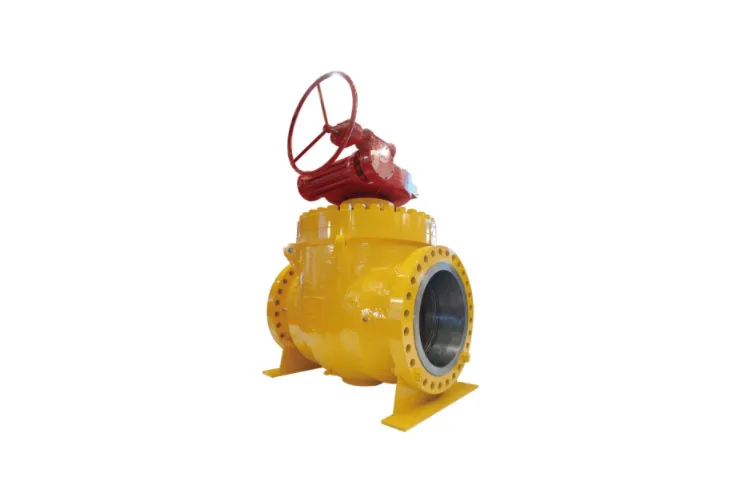
Industrial Top Entry Flow Control Ball Valve
Category: Ball ValveBrowse number:Number:Release time: 2026-10-18 11:55:27The Industrial Top Entry Ball Valve For Pipeline Flow Control is engineered for reliable operation in demanding industrial environments. Featuring a top-entry design, it allows easy maintenance and inspection without removing the valve from the pipeline, reducing downtime. Constructed from high-quality corrosion-resistant alloys, this valve ensures long-lasting performance in high-pressure, high-temperature, and aggressive chemical applications. Its precise ball and seat sealing provides leak-free flow control, while the robust structure withstands mechanical stress and abrasive media. Ideal for chemical, petrochemical, and power industries, this top entry ball valve delivers efficient, safe, and durable pipeline flow management.
News
Category:
-
[Industry News]Triple Offset Butterfly Valve for High Temperature Service
2026-02-28 05:55:05
Case
Category:
No search results found!
Video
Category:
No search results found!
Download
Category:
No search results found!
Job
Category:
No search results found!
Featured Products
No search results found!



 Phone
Phone