


Fixed ball valve Advantages in Long Distance Pipelines
Fixed ball valves play an important role in modern pipeline systems, especially in long distance pipelines where
stable performance, low operating torque, pressure resistance, and reliable shutoff are critical. In oil and gas transmission,
water transportation, chemical processing, and other industrial pipeline applications, a fixed ball valve is often selected
for its durability, tight sealing performance, and suitability for high-pressure and large-diameter service.
This article provides a clear, SEO-friendly, and industry-focused overview of fixed ball valve advantages in long distance pipelines.
It explains the definition, working principle, key benefits, typical specifications, common applications, selection factors,
and technical considerations. The content is written in original English and designed for use in blog pages, category pages,
industrial directories, and other Google-friendly HTML content sections.
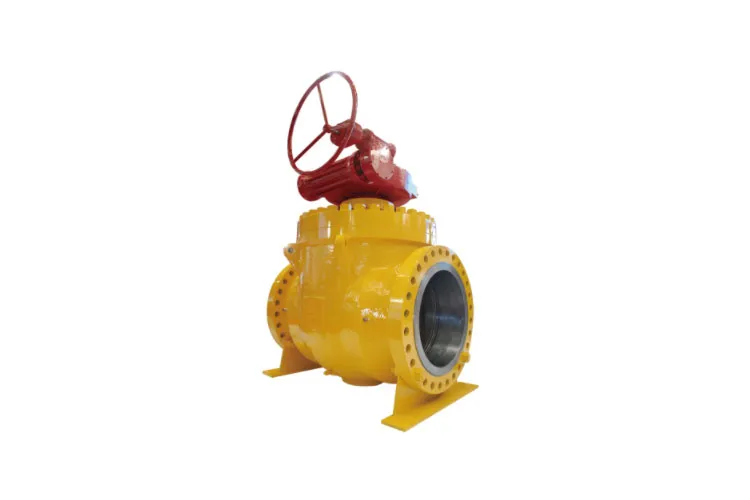
A fixed ball valve, also called a trunnion Mounted Ball valve, is a quarter-turn valve in which the ball is supported by
trunnions or shafts at the top and bottom. Unlike a floating ball valve, the ball in a fixed ball valve does not move freely
under line pressure. Instead, it remains stationary in position while the seats move toward the ball to create sealing.
This structural design makes the fixed ball valve especially suitable for long distance pipelines, where pressure,
flow stability, and repeated operation must be managed efficiently. Because the ball is supported on both ends, the valve can
handle larger sizes, higher pressures, and more demanding operating conditions than many alternative designs.
Long distance pipelines often carry media across hundreds or even thousands of kilometers. These systems face challenges such as
pressure variation, temperature changes, friction losses, flow surges, and external environmental stress. In such environments,
valve selection directly affects pipeline safety, operational efficiency, and maintenance cost.
A fixed ball valve is widely used because it provides dependable shutoff performance, low torque operation, and excellent sealing
under high pressure. These characteristics help pipeline operators maintain safe and efficient control over large-scale transport systems.
The main advantages of fixed ball valves in long distance pipelines are closely tied to their trunnion-mounted design.
Below are the most important benefits for industrial and pipeline applications.
One of the most significant fixed ball valve advantages is low operating torque. Since the ball is supported by trunnions,
the line pressure does not force the ball tightly against the seats in the same way as a Floating ball valve. This reduces the
force required to open and close the valve.
For long distance pipelines, where valves may be operated manually, by gearbox, electric actuator, or pneumatic actuator,
lower torque means easier operation, reduced actuator size, and lower energy consumption. It also improves reliability in
remote pipeline stations.
Long distance pipelines frequently operate under high pressure. Fixed ball valves are engineered for these demanding conditions.
The supported ball structure helps distribute load evenly, making the valve suitable for pressure classes commonly used in
transmission pipelines.
This high-pressure capability is a major reason why fixed ball valves are preferred in oil, gas, and fluid transmission systems.
They can provide safe isolation and dependable performance even when pressure levels fluctuate over time.
Another key advantage is tight shutoff. Fixed ball valves are designed to achieve reliable sealing through seat loading and
pressure-assisted contact. This is especially valuable in long distance pipelines, where leakage control is critical for
environmental protection, system efficiency, and operational safety.
Tight sealing reduces product loss, limits pressure drop, and helps maintain stable flow conditions over long distances.
In many pipeline systems, even a small leak can create major maintenance and compliance issues, so sealing performance is a top priority.
Because the ball is fixed in place, the sealing seats experience more controlled movement and contact. This can reduce wear
compared with some other valve types under high-pressure service. In long distance pipelines where valves are expected to work
for many years, longer service life offers a clear operational advantage.
Reduced seat wear also helps maintain performance consistency over time. Fewer seat replacements and less frequent maintenance
contribute to lower lifecycle cost and improved pipeline availability.
Fixed ball valves are widely used in large diameter pipeline systems. As valve size increases, operating torque and seat loading
become more difficult to manage. The trunnion-mounted structure solves many of these challenges by supporting the ball and reducing
pressure-related forces.
For long distance pipelines, large diameter sizes are common. Fixed ball valves provide a practical and technically sound solution
for these applications, offering stable operation and easier automation.
Long distance pipelines often include remote stations, unmanned facilities, and automated control points. Fixed ball valves are well
suited to automation because their low torque requirement makes actuator selection easier and more economical.
When paired with electric actuators, pneumatic actuators, or hydraulic systems, fixed ball valves offer efficient remote operation.
This improves response time, enhances safety, and supports modern pipeline monitoring and control systems.
Pressure fluctuations are common in long distance pipelines due to pump start-up, shutdown, temperature changes, and flow variations.
Fixed ball valves can withstand these changes effectively because the ball is supported and the seats are designed to manage
pressure-assisted sealing.
This resistance to pressure fluctuation helps preserve valve integrity and reduces the chance of performance loss under variable
operating conditions.
While the initial cost of a fixed ball valve may be higher than that of some simpler valve types, the lifecycle value is often better
in long distance pipelines. Lower torque, longer service life, reduced maintenance frequency, and dependable sealing all contribute
to lower total operating cost.
For pipeline operators, lifecycle cost is often more important than initial purchase price. Fixed ball valves offer a strong balance
of performance, durability, and long-term economic value.
Understanding the difference between fixed ball valves and floating ball valves is important when selecting valves for long distance
pipelines. The two designs may look similar, but their operating principles and performance characteristics are different.
| Feature | Fixed Ball Valve | Floating Ball Valve |
|---|---|---|
| Ball Support | Supported by trunnions on top and bottom | Ball floats with line pressure |
| Operating Torque | Lower torque | Higher torque as size and pressure increase |
| Pressure Suitability | Excellent for high pressure service | More suitable for smaller sizes and lower pressure |
| Large Diameter Use | Highly suitable | Less ideal for very large diameters |
| Sealing Mechanism | Seats move to the ball | Ball moves toward downstream seat |
| Automation | Easier to automate in pipeline systems | Automation becomes more difficult at larger sizes |
| Typical Pipeline Use | Long distance, high pressure, large diameter | General industrial and utility service |
Fixed ball valves are used across many pipeline industries. Their ability to provide secure shutoff and stable operation makes them
a versatile choice for critical infrastructure.
In these applications, fixed ball valve advantages in long distance pipelines include dependable shutoff, reduced actuation effort,
and compatibility with remote control systems.
Several design features contribute to the performance of fixed ball valves in pipeline service. These features are often specified
by engineering teams based on pressure rating, media type, and service conditions.
| Feature | Function | Pipeline Benefit |
|---|---|---|
| Trunnion Support | Holds the ball in fixed position | Reduces torque and improves stability |
| Anti-Blowout Stem | Prevents stem failure under pressure | Improves safety and reliability |
| Spring-Loaded Seats | Maintain consistent contact with the ball | Supports tight sealing |
| Double Block and Bleed Capability | Allows isolation and cavity pressure release | Enhances maintenance safety |
| Fire-Safe Design | Maintains partial sealing in fire conditions | Improves pipeline safety compliance |
| Low-Friction Seat Materials | Reduce wear during operation | Extends service life |
| Stem Sealing System | Prevents leakage around stem area | Improves overall integrity |
The exact specification of a fixed ball valve depends on pipeline pressure, temperature, medium, and installation environment.
The table below shows common technical parameters used in long distance pipeline projects.
| Specification Item | Typical Range / Options |
|---|---|
| Valve Type | Fixed ball valve / trunnion mounted ball valve |
| Size Range | 2 inches to 48 inches and above |
| Pressure Rating | Class 150 to Class 2500, depending on design |
| Body Materials | Carbon steel, stainless steel, alloy steel |
| Ball Material | Stainless steel, coated steel, hard-faced alloy |
| Seat Material | PTFE, RPTFE, nylon, metal seat, elastomeric seal |
| End Connection | Flanged, welded, butt welded, buried pipeline connection |
| Operation | Manual, gear operated, electric actuator, pneumatic actuator, hydraulic actuator |
| Design Standard | API, ASME, ISO, and other pipeline standards |
| Temperature Range | Dependent on materials and seat selection |
Material selection is a major factor in fixed ball valve performance. Since long distance pipelines often operate in harsh and
variable environments, the valve body, ball, stem, and seats must be selected carefully.
Carbon steel is commonly used for general pipeline service because it offers a good balance of strength and cost.
Stainless steel is preferred for corrosive media or where higher resistance to oxidation is needed. Alloy steel may be used
in demanding temperature or pressure environments.
The ball and stem should provide high strength, corrosion resistance, and smooth operation. Surface treatment, hard facing,
and anti-wear coatings may be applied to improve durability in abrasive or high-cycle pipeline systems.
Seat materials are selected based on sealing requirements, temperature, media type, and pressure conditions. Soft seats offer
excellent sealing, while metal seats provide better performance in high-temperature or abrasive service.
When evaluating fixed ball valve advantages in long distance pipelines, engineers typically focus on several design and operating factors.
These considerations help ensure the valve performs reliably over the full lifecycle of the pipeline.
A well-selected fixed ball valve can improve system reliability, reduce downtime, and support safer operation across long pipeline routes.
Many long distance pipelines are buried underground to protect the line and reduce environmental exposure. Fixed ball valves are often
used in buried block valve stations because they offer compact operation, long service life, and actuator compatibility.
In buried installations, maintenance access may be limited. This makes reliability especially important. Fixed ball valves are a strong
choice because they can be configured for remote operation, monitored through control systems, and designed for long-term performance
with minimal intervention.
In transmission pipelines, stable operation is essential. Fixed ball valves contribute to operational stability in several ways:
These benefits are especially important for long distance pipelines where every valve station must perform reliably under varying
environmental and operating conditions.
Maintenance is a critical factor in pipeline economics. Fixed ball valves offer several maintenance-related advantages that make
them attractive for long distance systems.
| Maintenance Aspect | Fixed Ball Valve Benefit |
|---|---|
| Operation Frequency | Designed for dependable repeated use |
| Seat Replacement | Often less frequent due to controlled wear |
| Actuator Load | Lower torque reduces actuator stress |
| Leak Prevention | Strong sealing helps limit downtime |
| Inspection | Structured design supports planned maintenance |
| Lifecycle Cost | Lower total cost through durability and reliability |
Safety is one of the top reasons fixed ball valves are used in long distance pipelines. Their support structure, reliable sealing,
and actuator compatibility help reduce operational risks.
In emergency situations, fast isolation may be required. Fixed ball valves can be integrated with automated systems to provide
quick and dependable shutoff. Their fire-safe, anti-static, and anti-blowout features can further improve safety performance
depending on the valve design and service requirements.
For content optimization, the following search terms are commonly associated with this topic:
Fixed ball valves provide a strong combination of low operating torque, high-pressure capability, tight sealing, long service life,
and large-diameter suitability. These advantages make them a preferred choice for long distance pipelines in oil, gas, water,
and industrial transport systems.
When pipeline operators need reliable shutoff, automation compatibility, and reduced lifecycle cost, the fixed ball valve is often
one of the most practical and efficient solutions. Its trunnion-mounted design offers clear performance advantages in demanding
pipeline environments, making it an essential component in modern transmission infrastructure.
For engineers, buyers, and project planners, understanding the fixed ball valve advantages in long distance pipelines is key to
making informed valve selection decisions. The right valve design can improve safety, reduce maintenance, and support long-term
operational success across the full pipeline network.
Contact Person:Max.Song(SongShanshan)
Title:General Manager
Mobile:+86 15611322632
Tell:+86 10 89282693
Email:international@bvmc.com
Address:No. 3, Lvhai Road, Pangezhuang Town, Daxing District, Beijing


Copyright © Beijing Valve General Factory Co., Ltd.
SitemapThis website uses cookies to ensure you get the best experience on our website.




 Phone