Fixed Ball Valve Advantages in High Pressure Pipelines
2026-04-19 07:39:35
Fixed <a href='/tag/ball-valve' target='_blank' class='key-tag'><font><strong>ball valve</strong></font></a> Advantages in High Pressure Pipelines
Fixed Ball Valve Advantages in High Pressure Pipelines
Fixed ball valves, often referred to as trunnion mounted ball valves, are one of the most reliable and widely used valve types in modern high pressure pipeline systems. In applications such as oil and gas transmission, petrochemical processing, power generation, and high pressure water injection, the choice of valve directly affects safety, efficiency, and operational cost. Understanding the structure, working principle, and performance advantages of fixed ball valves helps pipeline designers, operators, and maintenance teams select the most appropriate solution for demanding high pressure service.
1. Overview of Fixed Ball Valves in High Pressure Pipelines
A fixed ball valve is a quarter‑turn shut‑off valve in which the ball is mechanically held in position at the top and bottom by trunnions or journals. Unlike a Floating ball valve, the ball in a fixed ball valve does not move axially under line pressure. Instead, seat rings, typically spring‑loaded or pressure‑energized, move towards the ball to achieve a tight seal. This design is especially suitable for high pressure pipelines because the sealing performance is more stable, the operational torque remains relatively low, and the contact stress on the valve seats can be controlled.
In high pressure pipeline systems, valves must withstand not only elevated internal pressure but also temperature variations, pressure surges, vibration, and in some cases corrosive or erosive media. Fixed ball valves are widely chosen in these environments because they combine full‑bore flow characteristics with positive shut‑off, high cycle life, and the ability to integrate advanced features such as double block and bleed (DBB), emergency seat injection, and fire‑safe designs.
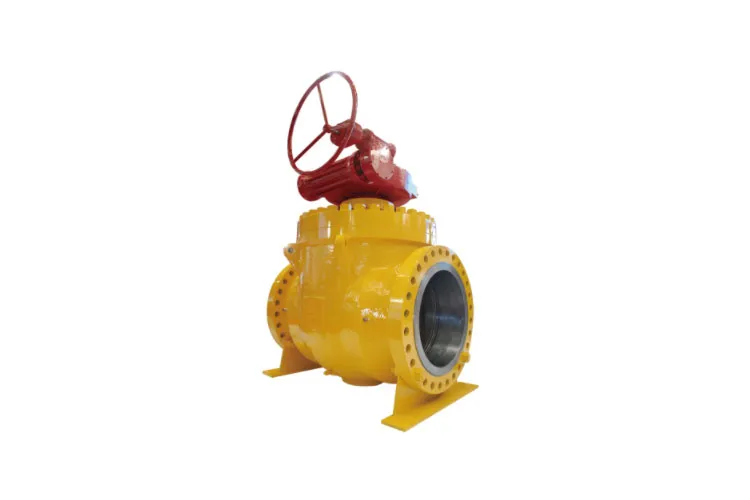
Typical Use Cases for Fixed Ball Valves in High Pressure Pipelines
2. Definition and Working Principle of Fixed Ball Valves
2.1 Definition of a Fixed Ball Valve
A fixed ball valve is a ball valve design in which the ball is supported by trunnions at both the top and bottom. The ball is fixed in position and does not float or move downstream under pressure. Sealing is achieved by seat rings that are movable and are typically spring loaded. When line pressure acts on the seats, they are pushed towards the ball, creating a sealing interface. This valve type is also commonly described as a trunnion mounted ball valve, particularly in standards such as API 6D and ISO 14313.
2.2 Main Components and Structure
Key components of a typical fixed ball valve used in high pressure pipelines include:
Body: The pressure boundary housing, available in cast or forged construction, often in two‑piece or three‑piece split body design.
Ball: The spherical closure element, usually full or reduced bore, supported by trunnions, often with hard‑faced or coated surfaces for wear and corrosion resistance.
Trunnions: Upper and lower shaft extensions or journals that support and locate the ball, reducing friction and supporting load.
Seats: Movable seat rings, often spring‑loaded and pressure‑energized, made of soft materials, metal, or a combination (metal‑to‑metal with soft inserts).
Stem: A quarter‑turn shaft that transmits torque from the handle, gear operator, or actuator to the ball.
Seals and Gaskets: Including stem packing, body gaskets, O‑rings, and other sealing elements for leakage control.
Bearings and Bushings: Reduce friction between moving metal parts, particularly between shaft and body.
Operator: Manual lever, gearbox, pneumatic actuator, hydraulic actuator, or electric actuator mounted on a standardized flange.
Typical Materials Used in Fixed Ball Valves for High Pressure Pipelines
Wear resistance, erosion, sour service compatibility, torque requirements
Seats
PTFE, reinforced PTFE, PEEK, Nylon, metal‑to‑metal with coatings
Operating temperature, chemical resistance, fire‑safe performance
Stem and Trunnions
Alloy steel, stainless steel
Strength, torsional load, corrosion resistance
Seals / Packing
Graphite, PTFE, elastomers (FKM, NBR, HNBR)
Temperature, media compatibility, emission regulations
2.3 Working Principle
The operation of a fixed ball valve is based on a quarter‑turn rotation of the ball between open and closed positions.
Open Position: The bore of the ball is aligned with the pipeline axis. Fluid flows through the valve with minimal resistance, particularly in full‑bore designs that allow pipeline pigs to pass.
Closing Motion: When the stem is rotated 90 degrees, the ball turns until the solid side faces the flow, gradually blocking the flow path.
Seat Sealing: Springs and line pressure push the seat rings against the ball surface. Because the ball is fixed, the seats move axially to establish a tight seal.
High Pressure Behavior: In high pressure pipelines, pressure acts on the downstream seat, further energizing the seal. Many designs also provide upstream sealing through double piston or self‑relieving seat arrangements.
Double Block and Bleed (Optional): With DBB capability, both upstream and downstream seats seal independently, allowing bleeding of the cavity between the seats for verification and maintenance.
3. Fixed Ball Valve vs. Floating Ball Valve in High Pressure Service
Although both fixed and floating ball valves are widely used in pipeline systems, their performance differs significantly in high pressure service. Fixed ball valves exhibit several decisive advantages when line pressure and pipe diameter increase.
Comparison of Fixed Ball Valves and Floating Ball Valves in High Pressure Pipelines
Characteristic
Fixed Ball Valve (Trunnion Mounted)
Floating Ball Valve
Ball Support
Ball supported by trunnions at top and bottom; mechanically fixed
Ball not supported by trunnions; held between seats and stem
Seat Movement
Seats are movable and pressure‑energized towards the ball
Seats are relatively fixed; ball moves downstream under pressure
Pressure Capability
Suitable for high pressure and large diameter
Generally for low to medium pressure and small to medium diameter
Operating Torque
Lower torque due to trunnion support and balanced forces
Higher torque at elevated pressures due to seat load on the ball
Seat Load Distribution
Controlled seat contact stress, less seat deformation
Seat compressed by ball displacement; more wear under high pressure
Leakage Performance
Reliable sealing under high differential pressure
Sealing may degrade at very high pressure or large sizes
Pipeline Size Range
Common from DN50 (2”) to DN1200 (48”) and above
Most common up to about DN300 (12”), depending on design
Typical Use in High Pressure Pipelines
Mainline block valves, scraper trap valves, station isolation
These differences explain why fixed ball valves are generally the preferred option for high pressure pipelines, especially in large diameters where the forces on the ball and seats become significant.
4. Key Advantages of Fixed Ball Valves in High Pressure Pipelines
4.1 Stable Sealing Performance at High Pressure
One of the greatest advantages of fixed ball valves in high pressure pipelines is their stable and reliable sealing performance. Because the ball is supported by trunnions, the fluid pressure does not push the ball into the downstream seat as it does in a floating design. Instead, the seats move towards the ball under spring force and line pressure. This design distributes the load evenly around the sealing interface and prevents excessive compression of the seat material. As a result, fixed ball valves maintain tight shut‑off across a wide pressure range and experience less deformation of the sealing elements. Many high pressure fixed ball valves are designed to comply with API 598 or ISO 5208 leakage requirements, including zero visible leakage for gas service.
4.2 Lower Operating Torque and Easier Automation
In high pressure pipeline applications, torque is a critical factor because it determines the size and cost of actuators and gear operators. Fixed ball valves offer significantly lower operating torque than equivalent floating ball valves at the same pressure class. The trunnion support system absorbs much of the side load on the ball, while low‑friction bearings reduce stem and trunnion friction. The seat design also minimizes the frictional area between seat and ball in both static and dynamic conditions. Lower operating torque means:
Smaller and more economical actuators for remote operation.
Lower energy consumption for automated systems.
Smoother operation with reduced risk of stem or seat damage.
Improved suitability for high cycle duties and process control in some applications.
4.3 Suitability for Large Diameter Pipelines
Large diameter high pressure pipelines impose significant mechanical loads on valve components, especially on the ball and seats. Fixed ball valves are well suited for line sizes from DN50 (2″) up to DN1200 (48″) and even larger. The trunnion mounted design supports the ball effectively, preventing sagging or misalignment, and enabling uniform seat contact around the circumference. In addition, full‑bore fixed ball valves can be designed for piggable service, allowing pipeline pigs for cleaning and inspection to pass through without obstruction. This is particularly important in long‑distance oil and gas pipelines and compressor or pumping stations.
4.4 Double Block and Bleed Capability
Many fixed ball valve designs for high pressure pipelines incorporate double block and bleed (DBB) functionality. This means that when the valve is in the closed position, both the upstream and downstream seats seal against the ball, isolating the cavity between them. An additional bleed port or drain connection allows the operator to vent the cavity to confirm tight shut‑off on both sides, relieve pressure, or drain trapped media.
DBB capability provides several advantages in high pressure pipeline operations:
Enhanced safety during maintenance by isolating pressure from both sides of the valve.
Verification of seat integrity without removing the valve from the line.
Prevention of unwanted pressure build‑up in the valve cavity.
Improved system redundancy and flexibility for complex pipeline networks.
4.5 Fire‑Safe and Fugitive Emission Performance
High pressure pipelines often transport flammable and hazardous fluids. Fire‑safe design and fugitive emission control are therefore critical for fixed ball valves used in these applications. Many fixed ball valves are designed and tested according to fire‑safe standards such as API 607 or ISO 10497, ensuring that in the event of a fire, secondary metal‑to‑metal sealing surfaces can maintain a certain level of sealing even if soft seals are damaged by heat.
Furthermore, modern fixed ball valves for high pressure pipelines incorporate advanced stem packing systems, low emission bonnet designs, and high integrity body joints to control fugitive emissions. Compliance with ISO 15848 or equivalent standards is increasingly specified in new pipeline projects, especially in regions with strict environmental regulations. The stable geometry of the trunnion mounted assembly helps maintain consistent packing stress and reduces long‑term leakage risk around the stem.
4.6 Versatility of Materials and Design Configurations
Another important advantage of fixed ball valves is the wide range of materials, end connections, and body configurations available for high pressure pipeline service. Designers can choose from multiple body styles (top‑entry, side‑entry, fully welded), seat types (soft seated, metal seated, hybrid), and corrosion resistant materials to match specific operating conditions.
This versatility allows fixed ball valves to address specialized requirements such as sour service in accordance with NACE MR0175 / ISO 15156, high temperature operation, cryogenic service, or highly corrosive fluids. It also supports the integration of additional features like emergency sealant injection fittings, anti‑static devices, blow‑out proof stems, and lockable handle mechanisms.
5. Design Features of Fixed Ball Valves for High Pressure Pipelines
5.1 Body Design: Side‑Entry, Top‑Entry, and Fully Welded
Fixed ball valves for high pressure pipelines are available in several body designs, each with its own advantages and limitations.
Side‑Entry (Split Body): Typically two‑piece or three‑piece split body construction. This design is common for onshore and offshore pipeline applications because it combines ease of assembly with robust strength. Maintenance of internal components requires valve removal from the pipeline or body disassembly.
Top‑Entry: The internal components can be accessed from the top by removing a bonnet or cover. This design is advantageous where in‑line maintenance is desirable, such as in buried or hard‑to‑access pipeline locations. The top‑entry configuration also offers a compact footprint and is popular in some high pressure station valves.
Fully Welded Body: The body is welded, which eliminates body gaskets and potential external leak paths. Fully welded fixed ball valves are especially suitable for buried or subsea high pressure pipelines, where long‑term external sealing integrity and minimum maintenance are critical.
Comparison of Common Fixed Ball Valve Body Designs in High Pressure Pipelines
Body Design
Key Benefits
Typical Applications
Side‑Entry Split Body
Good mechanical strength, flexible manufacturing, wide availability
Mainline isolation, station block valves, above‑ground pipelines
Top‑Entry
In‑line maintainability, compact footprint
Compressor stations, pump stations, areas with limited space
Fully Welded
No external body gasket, ideal for buried service
Buried gas transmission lines, road and river crossings
5.2 Seat Design and Cavity Relief
The seat design of a fixed ball valve plays a crucial role in overall performance, especially at high pressure. Common seat design principles include:
Spring‑Loaded Seats: Springs behind the seat rings push them towards the ball, ensuring initial contact and allowing for thermal expansion or contraction.
Pressure‑Energized Seats: Line pressure acts on the back of the seat to increase the sealing force as pressure rises.
Double Piston Effect Seats: Both upstream and downstream sides of the seat can generate sealing force, supporting double isolation but requiring special cavity pressure relief features.
Self‑Relieving Seats: Designed to allow automatic relief of excess cavity pressure to either the upstream or downstream side, protecting the valve body from over‑pressurization.
In high pressure pipelines, cavity over‑pressure can occur due to thermal expansion of trapped fluid or pressure fluctuations. Proper cavity relief through seat design or dedicated relief valves is essential to maintain safety and protect the pressure containing parts.
5.3 Stem and Trunnion Sealing
The stem and trunnion areas are critical sealing points in fixed ball valves. High pressure designs typically include:
Blow‑out proof stem construction with an integral shoulder inside the body.
Multiple stem packing rings using graphite or PTFE, sometimes combined with O‑rings for primary sealing.
Live‑loading or Belleville spring packs to maintain packing stress over time and temperature changes.
Anti‑static devices providing electrical continuity between ball, stem, and body for safety in flammable services.
5.4 End Connections for High Pressure Pipelines
Fixed ball valves designed for high pressure pipelines are available with various end connections to match pipeline specifications and installation practices:
Welded Ends: Butt‑weld ends are common in high pressure pipelines due to their strength and leak‑tight integrity. They are widely used in buried gas and oil transmission lines.
Flanged Ends: Raised‑face (RF), ring‑type joint (RTJ), or other flanged styles in accordance with ASME B16.5 or equivalent standards are used in above‑ground or station piping where frequent disassembly may be required.
Hub Connections: Compact hub connections or clamp‑type connectors are used in offshore and subsea pipelines for weight reduction and easier handling.
6. Typical Specifications of Fixed Ball Valves for High Pressure Pipelines
While actual specifications vary according to manufacturer and project requirements, the following table summarizes typical ranges and characteristics of fixed ball valves in high pressure pipeline service.
Typical Specification Range for Fixed Ball Valves in High Pressure Pipelines
Parameter
Typical Range / Description
Nominal Size (DN / NPS)
DN50 – DN1200 (NPS 2″ – 48″) or larger on request
Pressure Rating
ANSI / ASME Class 150 – Class 2500; PN10 – PN420
Body Materials
Carbon steels, low temperature carbon steels, low alloy steels, stainless steels, duplex / super duplex, corrosion resistant alloys
Seat Materials
Soft seats (PTFE, RPTFE, Nylon, PEEK) or metal‑to‑metal (Stellite, hard coatings) depending on pressure, temperature, and media
End Connections
Butt‑weld, flanged RF/RTJ, hubs, clamp connectors
Operating Temperature
Approximately −196°C to +400°C or higher, depending on materials and design
Operation Mode
Manual lever, gear operator, pneumatic actuator, hydraulic actuator, electric actuator
Design Standards
API 6D, ISO 14313, ASME B16.34, EN 12516, ISO 17292, and others
Testing Standards
API 598, ISO 5208, API 6D testing, fire‑safe testing to API 607 / ISO 10497
7. Typical Applications of Fixed Ball Valves in High Pressure Pipelines
7.1 Crude Oil and Refined Product Transmission Pipelines
In long‑distance oil transmission systems, fixed ball valves are used as mainline block valves, station isolation valves, scraper trap valves, and manifold valves. They provide reliable shut‑off to isolate pipeline segments during maintenance, repairs, or emergencies. Full‑bore trunnion mounted ball valves allow pipeline pigs and cleaning tools to pass freely, supporting efficient internal inspection and cleaning programs. Their low pressure drop helps reduce pumping energy consumption across the system.
7.2 Natural Gas Transmission and Distribution Networks
High pressure natural gas transmission pipelines require valves that can handle compressible gas at high velocities while maintaining bubble‑tight sealing. Fixed ball valves are widely used at compressor stations, city gate stations, and block valve stations. Their fire‑safe and low emission features are crucial for mitigating environmental and safety risks. In gas service, soft‑seated fixed ball valves are often chosen because of their excellent tightness, while metal‑seated designs may be used where high temperature or erosive contaminants are present.
7.3 Offshore Platforms and Subsea Pipelines
Offshore and subsea environments impose additional challenges for valves due to corrosion, limited access, and high safety requirements. Fixed ball valves in these applications are often made from corrosion resistant alloys and may be equipped with special external coatings and cathodic protection systems. Fully welded fixed ball valves are frequently used in subsea pipelines, with actuators designed for remote operation via hydraulic or electric control systems. The robust trunnion mounted design ensures reliable performance despite external hydrostatic pressure and harsh marine conditions.
7.4 High Pressure Injection and Gathering Systems
Produced water injection, CO2 injection, and high pressure waterflood systems typically operate at high pressures to overcome reservoir or formation resistance. These systems require valves that can withstand erosion and potential scaling. Metal‑seated fixed ball valves or designs with hard‑faced trim are suitable for such applications. In gathering systems for oil and gas production, fixed ball valves are used to control flow from multiple wells, isolate headers, and protect downstream processing facilities.
7.5 Refinery and Petrochemical High Pressure Services
Refineries and petrochemical complexes include high pressure process lines where precise isolation and low leakage are essential for safe operation. Fixed ball valves are used in hydrocracking units, hydrotreaters, reformers, and high pressure gas lines. Material selection focuses on compatibility with the specific process fluids, which may include hydrogen, aromatics, or corrosive chemicals. In these services, fixed ball valves are often specified with advanced packing materials to comply with stringent fugitive emission regulations.
7.6 Power Generation and Industrial Utilities
In power plants, including combined cycle, coal‑fired, and nuclear facilities, fixed ball valves are used in high pressure auxiliary systems, gas lines, and fuel supply lines. Their fast operation and reliable performance make them suitable for emergency shutdown systems, turbine fuel isolation, and boiler feedwater isolation. Proper material and seat selection enable these valves to handle high temperature steam and aggressive boiler feedwater chemistry when necessary.
8. Selection Considerations for Fixed Ball Valves in High Pressure Pipelines
8.1 Process Conditions and Fluid Properties
When selecting fixed ball valves for high pressure pipelines, engineers must carefully evaluate process conditions:
Pressure and Temperature: The maximum operating pressure and temperature define the required pressure class and material limits.
Fluid Type: Whether the medium is gas, liquid, multiphase mixture, corrosive, erosive, or containing solids affects material and seat choices.
Phase Behavior: High pressure gas can lead to high velocity and potential erosion. Multiphase flows can cause slugging or cavitation in partially open positions.
Sour Service: In environments containing H2S, materials must meet NACE requirements to prevent sulfide stress cracking.
8.2 Valve Function and Operating Philosophy
The intended function of the fixed ball valve in the pipeline will also influence design selection:
On/Off Isolation: Most high pressure pipeline fixed ball valves are used for isolation, requiring full shut‑off and minimal pressure drop when open.
Emergency Shutdown (ESD): For emergency shut‑down applications, fast and reliable actuation is critical. Actuator sizing, fail‑safe direction, and control systems must be carefully engineered.
Throttling / Control: While ball valves are not typically preferred for continuous throttling in pipelines, certain fixed ball valve designs can handle limited control duties when equipped with appropriate seats and actuation.
8.3 Installation Environment
High pressure pipelines may be installed above ground, buried, offshore, or subsea. Each environment imposes different requirements:
Above‑Ground Pipelines: Easy access for maintenance; flanged or welded end connections are common.
Buried Pipelines: Corrosion protection, coating integrity, and fully welded bodies are often specified. Remote actuation and position indication may be required.
Offshore Platforms: Weight and space limitations often lead to compact designs and hub connections. Corrosion and wave loading are significant concerns.
Subsea Pipelines: Subsea fixed ball valves require robust corrosion resistance, ROV‑friendly interfaces, and high reliability under external hydrostatic pressure.
8.4 Maintenance and Lifecycle Cost
High pressure pipeline projects typically have long design lives. Choosing a fixed ball valve with optimized lifecycle cost rather than the lowest initial cost can reduce total ownership cost over time. Factors to consider include:
Expected maintenance intervals and ease of service.
Availability of spare parts and compatibility with existing actuation systems.
Resistance to wear, erosion, and corrosion, which influence service life.
Energy consumption of actuators due to operating torque.
9. Relevant Standards and Certifications for Fixed Ball Valves in High Pressure Pipelines
Adherence to recognized international standards is essential for fixed ball valves used in high pressure pipeline systems. Commonly referenced standards include:
Design and Manufacture:
API 6D – Specification for Pipeline Valves
ISO 14313 – Pipeline Transportation Systems for the Petroleum and Natural Gas Industries – Pipeline Valves
ASME B16.34 – Valves – Flanged, Threaded, and Welding End
ISO 17292 – Metal Ball Valves for the Petroleum, Petrochemical and Allied Industries
API 607 / ISO 10497 – Fire Test for Soft‑Seated Valves
ISO 15848 – Industrial Valves – Measurement, Test and Qualification Procedures for Fugitive Emissions
Material and Corrosion:
NACE MR0175 / ISO 15156 – Petroleum and Natural Gas Industries – Materials for Use in H2S‑Containing Environments
ASTM / EN material standards for forgings, castings, and bar products
Compliance with these standards ensures that fixed ball valves used in high pressure pipelines are designed for appropriate safety margins, tested for leakage and structural integrity, and suitable for the specific operating environment.
10. Summary of Fixed Ball Valve Advantages in High Pressure Pipelines
Fixed ball valves provide a combination of technical and operational advantages that make them a preferred choice in high pressure pipeline systems across multiple industries. Their trunnion mounted design offers stable sealing, low torque, and suitability for large diameters, while modern materials and design options enable safe performance in challenging environments.
Summary of Key Advantages of Fixed Ball Valves in High Pressure Pipelines
Enhances environmental protection and personnel safety
Design Flexibility
Multiple body configurations, materials, and seat options
Adapts to different media, temperatures, and installation environments
Lifecycle Performance
Resistance to wear and corrosion, reliable seat performance
Reduces maintenance frequency and total ownership cost
For engineers, operators, and asset owners responsible for high pressure pipelines, understanding these advantages helps in making informed decisions during design, selection, and operation of pipeline valve systems. When correctly specified and maintained, fixed ball valves contribute significantly to the long‑term safety, reliability, and efficiency of high pressure pipeline infrastructure.






 Phone