


Industry Background and Market Demand
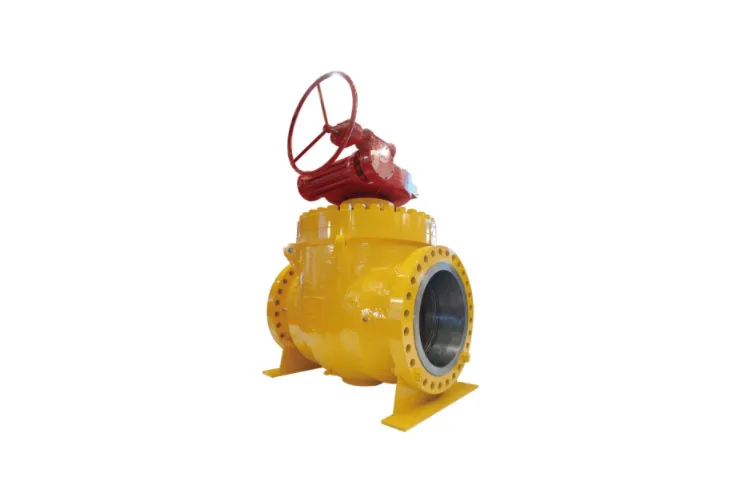
Large bore Butterfly valves play a central role in modern fluid transport systems where high flow rates, large pipe diameters, and energy efficiency are critical. Industries such as municipal water supply, wastewater treatment, power generation, oil and gas transmission, desalination, and large-scale HVAC increasingly rely on these valves to regulate and isolate flow in pipelines ranging from several hundred millimeters to multiple meters in diameter.
As infrastructure projects expand and operating costs face tighter scrutiny, flow control efficiency has become a decisive performance metric. Engineers are no longer focused solely on basic shut-off capability; instead, they evaluate pressure loss, controllability, torque requirements, service life, and lifecycle energy consumption. This shift in demand has driven significant design and manufacturing advancements in large bore butterfly valves.
Core Concepts of Flow Control Efficiency
Flow Control Efficiency in Large Bore Butterfly Valves refers to how effectively the valve regulates flow with minimal energy loss and stable control across its operating range. It is commonly assessed through parameters such as flow coefficient (Cv), pressure drop, flow profile stability, and response to partial opening positions.
Unlike gate valves, which primarily operate in fully open or closed states, butterfly valves are inherently suited for throttling. The disc rotates within the flow path, allowing proportional control. In large diameters, even small changes in disc angle can result in substantial flow variation, making disc geometry and control accuracy critical to efficient operation.
Valve Structure, Performance, and Manufacturing Considerations
A typical large bore butterfly valve consists of a valve body, disc, shaft, seat, bearings, and actuation interface. Each component contributes directly to flow behavior and efficiency.
The disc design is particularly influential. Streamlined or contoured discs reduce turbulence and wake formation downstream, lowering pressure loss compared to flat or bulky profiles. For high-performance applications, double offset or triple offset designs shift the shaft away from the centerline, minimizing disc-seat interference and reducing friction during operation.
Material selection also affects efficiency. Ductile iron, carbon steel, and stainless steel bodies provide structural stability, while disc materials are often optimized for both strength and hydrodynamic performance. Precision casting and CNC machining ensure tight tolerances, which help maintain consistent flow characteristics and predictable control curves.
Manufacturing quality directly impacts efficiency at scale. Poor concentricity, uneven sealing surfaces, or shaft misalignment can introduce vibration, leakage, and uneven torque, all of which degrade flow control performance over time.
Key Factors Affecting Flow Control Performance
Several factors determine how efficiently a large bore butterfly valve performs in service:
-
Disc geometry and thickness influence pressure drop and flow recovery.
-
Offset configuration affects sealing friction and torque consistency.
-
Seat design and material determine leakage control and operational smoothness.
-
Actuation method—manual, electric, or pneumatic—impacts positioning accuracy and responsiveness.
-
Installation orientation and upstream/downstream piping affect flow stability, especially in throttling applications.
In large-diameter systems, even minor inefficiencies can translate into significant energy losses due to high volumetric flow rates.

Supply Chain and Supplier Selection Criteria
Selecting the right supplier is essential for achieving consistent flow control efficiency. Buyers should evaluate suppliers based on technical capability rather than price alone. Key criteria include experience with large-diameter valves, documented flow testing, compliance with international standards, and traceable material certification.
Reliable suppliers typically offer flow coefficient data, torque curves, and application-specific recommendations. Equally important is manufacturing consistency, as large bore valves often operate in critical infrastructure where downtime or replacement costs are substantial.
Common Challenges and Industry Pain Points
One common issue is unstable flow control at partial openings. In poorly designed valves, this can lead to oscillation, noise, or cavitation, particularly in high-flow water systems. Excessive operating torque is another challenge, often caused by suboptimal disc-seat interaction or inadequate bearing design.
Maintenance access is also a concern. Large bore butterfly valves are physically imposing, and inefficient designs may require frequent intervention, increasing operational costs and safety risks.
Application Scenarios and Use Cases
In municipal water transmission, large bore butterfly valves are used to regulate flow between reservoirs and treatment plants. Efficient flow control helps minimize pumping energy while maintaining stable supply pressure.
In power generation, especially cooling water circuits, these valves manage large volumes under continuous operation. Here, low pressure drop and reliable throttling contribute directly to plant efficiency.
Oil and gas pipelines also employ large bore butterfly valves in low-pressure or terminal applications, where rapid response and predictable flow behavior are more valuable than absolute shut-off force.
Current Trends and Future Developments
The industry is moving toward more refined computational fluid dynamics (CFD)-driven designs, allowing manufacturers to optimize disc profiles and flow paths before production. Advanced coatings and composite seat materials are improving wear resistance without compromising flow efficiency.
Digital actuators and smart positioners are also gaining traction, enabling precise flow modulation and real-time performance monitoring. As sustainability goals tighten, valves that reduce energy loss and extend service life will continue to gain preference.
Frequently Asked Questions
Are large bore butterfly valves suitable for precise flow control?
Yes, when properly designed and actuated, they offer stable and repeatable control in large-diameter systems.
How does valve size affect efficiency?
As size increases, pressure loss becomes more significant in absolute terms, making optimized disc and body design essential.
What is the main advantage over gate valves in large diameters?
Butterfly valves provide better throttling capability with lower weight and reduced installation space.
Conclusion
Flow control efficiency in large bore butterfly valves is the result of integrated design, material selection, manufacturing precision, and application-specific engineering. As infrastructure systems grow in scale and complexity, efficient flow regulation is no longer optional—it is fundamental to operational reliability and energy performance. By understanding the technical factors behind efficiency, engineers and procurement teams can make informed decisions that deliver long-term value.



 Phone
Phone