
Chemical Grade DBB Valve
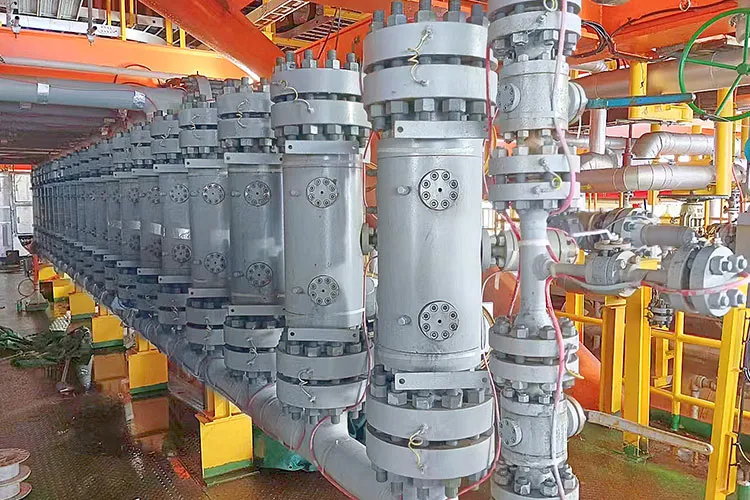
Chemical Grade DBB Valve are specially designed dual-block-and-bleed valves for the demanding conditions of chemical production. They focus on safely controlling corrosive acids and bases, toxic or hazardous, and flammable or explosive media. Constructed from corrosion-resistant materials with a dual-seal design, a single valve can provide bidirectional isolation and intermediate cavity venting. The valves offer core advantages of corrosion resistance, zero leakage, and high safety redundancy, effectively preventing leakage, runaway reactions, and other safety risks in chemical processes, ensuring stable operation of process systems.
The structural design addresses chemical corrosion resistance and safety requirements. The valve body is made from 316L stainless steel, Hastelloy C-276, or Monel 400, with PTFE lining or ceramic coating for highly corrosive applications. Bodies are manufactured through integral forging or precision casting, with wall thickness meeting API 6D and ASME B16.34 standards, capable of withstanding long-term exposure to acidic, alkaline, or Cl⁻/H₂S/CO₂-containing media.

The core sealing surfaces use a “corrosion-resistant alloy + flexible sealing” combination. Disc sealing surfaces are overlay welded with Stellite 6 or enhanced PTFE layers. The seat uses a floating elastic structure with spring preloading to automatically compensate for corrosion and wear, achieving leakage performance of ANSI B16.104 Class VI. The dual-seat plus intermediate bleed channel is the core structure, with the intermediate cavity vent port equipped with a miniature needle valve to allow real-time monitoring of the seal and discharge of residual media, preventing mixing of incompatible media. The stem is made from the same corrosion-resistant material as the body, treated with passivation or nitriding, combined with dual packing using PTFE and flexible graphite to prevent leakage along the stem. Actuation options include manual, electric, and pneumatic drives.
Key technical parameters include nominal sizes DN15–DN300 (1/2"–12") and pressure ratings PN10–PN420 (Class 150–2500 LB). Operating temperature ranges from –40 °C to 350 °C, with fluoroplastic-lined versions suitable for –196 °C to 180 °C. High-temperature chemical applications can use chromium–molybdenum alloy steel to extend service up to 550 °C. Corrosion resistance meets NACE MR0175, suitable for media with pH 1–14, including sulfur- or chlorine-containing corrosive fluids. Connections include flanged (ASME B16.5, GB/T 9113) or butt-welded, with sealing surfaces supporting RF and RTJ types. Manufacturing and testing strictly follow API 6D, ASME B16.34, and API 598 standards, including corrosion resistance tests, dual-seal tests, bleed function tests, and non-destructive examinations.
The valve offers three main performance advantages. First, strong corrosion resistance: the full-process corrosion-resistant materials and linings make it suitable for a wide range of chemical media, extending service life 2–3 times compared with standard DBB Valves. Second, comprehensive safety protection: the dual-block function prevents leakage of toxic or hazardous media, and the intermediate cavity bleed facilitates troubleshooting, suitable for high-risk operations. Third, broad process adaptability: it meets the requirements of chemical reactions, distillation, extraction, and other process stages without frequent valve replacement. Typical applications include chemical reactor inlets and outlets, distillation column piping, chemical raw material transport pipelines, and high-risk medium storage tank outlets, handling acidic, alkaline, petrochemical, syngas, and fine chemical intermediates.
Contact Person:Max.Song(SongShanshan)
Title:General Manager
Mobile:+86 15611322632
Tell:+86 10 89282693
Email:international@bvmc.com
Address:No. 3, Lvhai Road, Pangezhuang Town, Daxing District, Beijing


Copyright © Beijing Valve General Factory Co., Ltd.
SitemapThis website uses cookies to ensure you get the best experience on our website.




 Phone