
Emergency Shutoff Applications Durable ESDV Valves
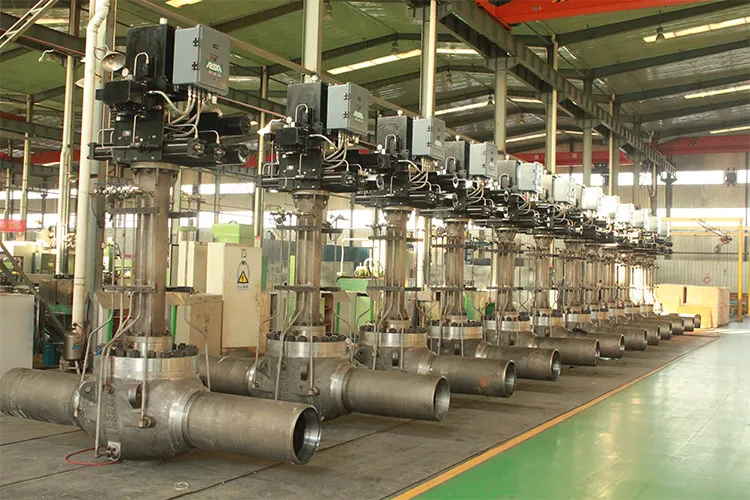
Emergency Shutoff Applications Durable ESDV Valves are critical safety components engineered to provide rapid isolation of hazardous media in industrial facilities during emergency scenarios such as leaks, overpressure, fires, or equipment malfunctions. Durable ESDVs, optimized for long-term reliability and harsh operating conditions, integrate robust construction, corrosion-resistant materials, and high-speed actuation systems to ensure fail-safe performance in high-risk industries including oil and gas, petrochemicals, LNG processing, and chemical manufacturing. Their core function—swiftly stopping the flow of flammable, toxic, or corrosive substances—minimizes the risk of catastrophic accidents, environmental contamination, and operational downtime.
In terms of structural design, durable ESDVs prioritize mechanical strength and longevity. Valve bodies are fabricated from high-grade materials such as WCB carbon steel, 316L stainless steel, chrome-molybdenum alloy steel, or corrosion-resistant superalloys (e.g., Hastelloy, Monel) for extreme service environments. Employing either integral forging or thick-walled casting processes ensures a dense, defect-free structure with superior pressure-bearing capacity and impact resistance, extending service life by 300-500% compared to standard valves. The closure element (ball or gate) features a hard-seated design, with sealing surfaces overlay welded with Stellite 6 or cobalt-based cemented carbide (hardness ≥ HRC 60) to enhance wear and erosion resistance. A "metal-to-metal hard seal + elastic compensation" system, combined with Inconel alloy springs, automatically compensates for thermal deformation and seal wear, achieving ANSI B16.104 Class VI leakage tightness to prevent media seepage post-shutoff.

Actuation systems are tailored for rapid response and reliability. Durable ESDVs are equipped with spring-return pneumatic actuators, electro-hydraulic actuators, or manual quick-acting mechanisms, delivering full-stroke actuation times of 1-3 seconds (size-dependent) to meet emergency isolation requirements. They support multiple control modes: remote operation via PLC/DCS systems, local manual activation, and automatic triggering linked to pressure transmitters, temperature sensors, or fire detection systems—ensuring redundant safety layers. Valve stems undergo quenching and tempering plus nitriding treatment, paired with double packing seals (flexible graphite + PTFE) to eliminate stem leakage and enhance durability under cyclic operation.
Key technical specifications include: nominal diameters ranging from DN25 to DN600 (1"-24"), pressure ratings from PN10 to PN420 (Class 150-2500LB), and operating temperatures spanning -196℃ (cryogenic LNG applications) to 600℃ (high-temperature hydrocarbon processing). Durability compliance meets API 6D and API 6FA standards, with a minimum of 100,000 cycle operations without failure. Fire-safe design adheres to API 607/6FA, maintaining sealing integrity during fire emergencies. Connection types include flanged (ASME B16.5, GB/T 9113) and butt-welded, with seal faces available in RF (Raised Face) or RTJ (Ring Type Joint) configurations to suit pipeline systems.
Typical applications include: crude oil and refined product storage tank outlets, petrochemical reactor feed lines, hydroprocessing unit critical points, oil and gas transmission pipeline stations, LNG terminal storage systems, chemical toxic/corrosive media transfer lines, and offshore platform processing systems. By rapidly isolating hazardous media sources, durable ESDVs play a pivotal role in industrial safety frameworks, safeguarding personnel, equipment, and the environment from potential disasters.
Contact Person:Max.Song(SongShanshan)
Title:General Manager
Mobile:+86 15611322632
Tell:+86 10 89282693
Email:international@bvmc.com
Address:No. 3, Lvhai Road, Pangezhuang Town, Daxing District, Beijing


Copyright © Beijing Valve General Factory Co., Ltd.
SitemapThis website uses cookies to ensure you get the best experience on our website.




 Phone
Phone