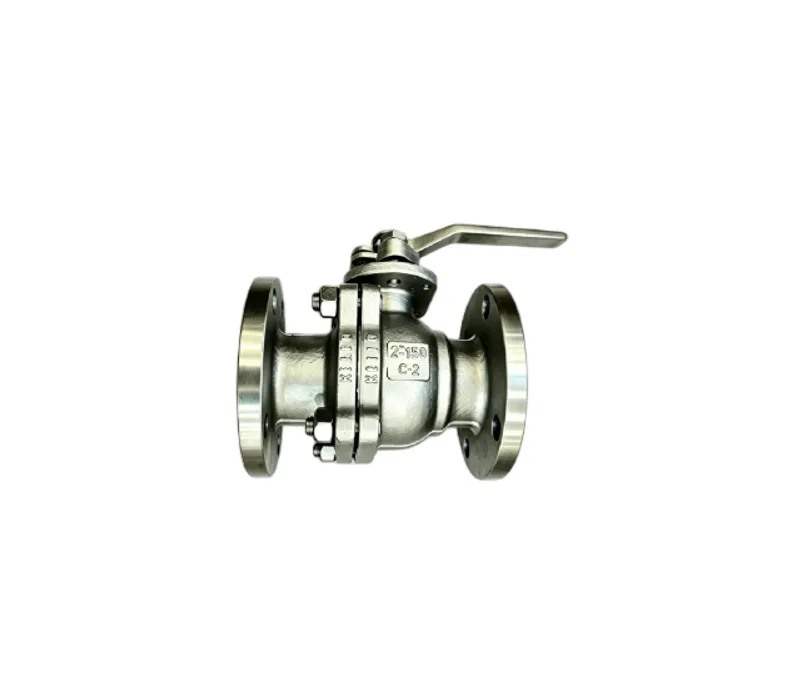
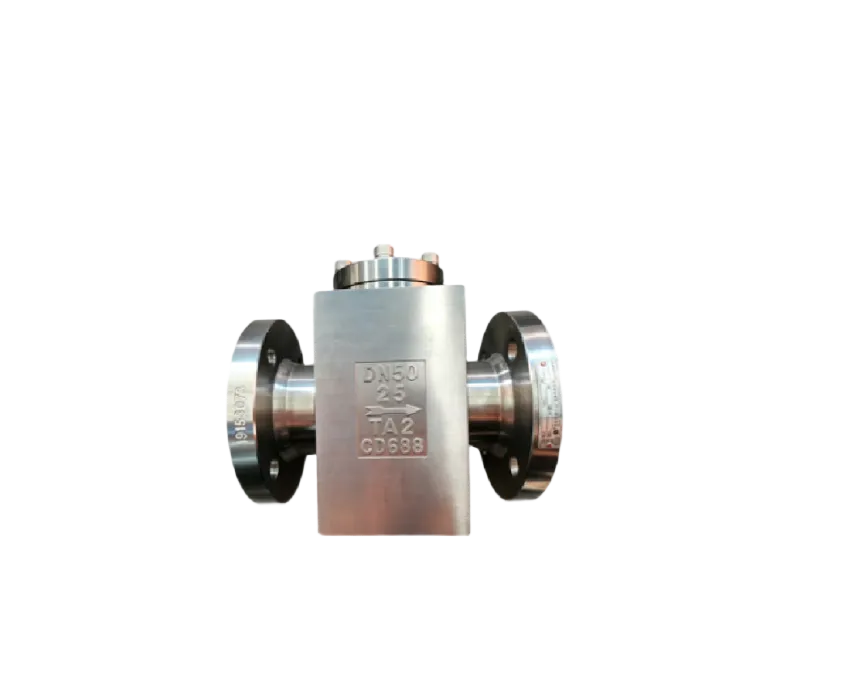
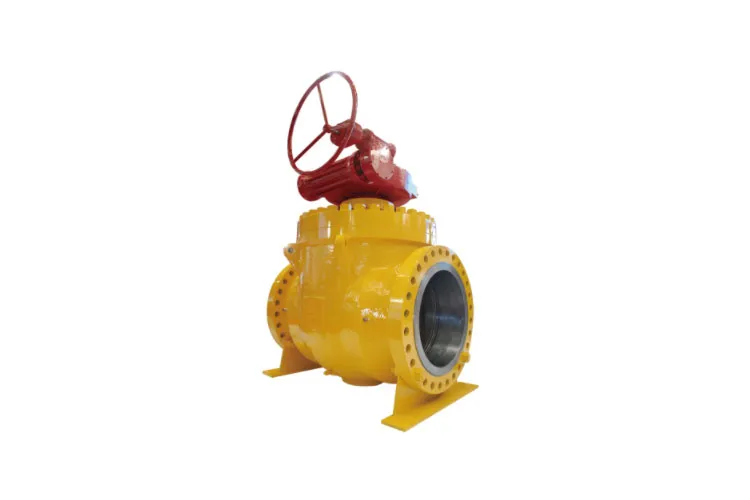
Fixed <a href='/tag/ball-valve' target='_blank' class='key-tag'><font><strong>ball valve</strong></font></a> for High Pressure Pipeline Systems: Complete Technical Guide
Fixed Ball Valve for High Pressure Pipeline Systems: Complete Technical Guide
A fixed ball valve for high pressure pipeline systems is a critical component in oil and gas, petrochemical,
power generation, and industrial fluid networks. This guide explains the design, working principles,
technical specifications, and selection criteria of fixed ball valves used in high pressure applications.
All information is presented in general, industry-wide terms and is suitable for use on blogs, directory
pages, and industry landing pages.
1. What Is a Fixed Ball Valve for High Pressure Pipeline Systems?
A fixed ball valve (also widely known as a trunnion mounted ball valve) is a
quarter‑turn shut‑off valve where the ball is mechanically supported at both the top and bottom by
trunnions or bearings. In high pressure pipeline systems, this fixed design provides
better stability, reduced operating torque, and improved sealing performance compared with free‑floating
ball valve designs.
In high pressure applications, fixed ball valves are preferred because the ball does not move axially under
pressure. Instead, the seat rings are designed to move slightly to achieve tight sealing against the ball.
This design minimizes wear on the seats and reduces the risk of deformation under high differential pressure.
Typical applications of fixed ball valves for high pressure pipeline systems include:
- Transmission pipelines for crude oil and refined products
- Natural gas and high pressure gas distribution networks
- Offshore and onshore oil and gas process facilities
- Petrochemical and chemical processing plants
- High pressure water injection and disposal systems
- High pressure steam and condensate lines (with proper materials)
2. Key Design Features of Fixed Ball Valves
Fixed ball valves for high pressure pipeline systems incorporate several structural features that distinguish
them from standard floating ball valves and other valve types.
2.1 Trunnion Mounted Ball
The defining feature of a fixed ball valve is the trunnion mounted ball. The ball is supported
by upper and lower trunnions that are connected to the body using bearings or bushings. The ball can rotate
90 degrees to open or close the valve, but it cannot move in the direction of flow.
This feature:
- Reduces the load on the valve seats
- Maintains stable positioning of the ball under high pressure
- Lowers operating torque, allowing for smaller actuators
2.2 Spring-Loaded or Self-Relieving Seats
In a high pressure pipeline system, pressure on the upstream side can be very high. To ensure reliable
sealing and allow pressure relief, fixed ball valves usually employ:
- Spring-loaded seats that press the seat ring against the ball
- Self-relieving seats that allow trapped cavity pressure to be vented to the upstream or downstream side
This design helps maintain tight sealing performance while protecting the valve body from overpressure.
2.3 Anti-Blowout Stem Design
An anti-blowout stem design is an essential safety feature in high pressure fixed ball valves. The stem is
inserted from the inside of the valve body and is retained by a shoulder or mechanism that prevents it from
being ejected under pressure, even if the gland packing or external components are removed.
2.4 Fire-Safe Construction
For use in hazardous high pressure pipeline systems handling flammable fluids, fixed ball valves are often
designed to meet fire-safe standards. Fire-safe construction ensures that in the event of a
fire, soft sealing materials that may be damaged by high temperature are backed up by metal-to-metal sealing
surfaces, providing a degree of shut-off to prevent uncontrolled leakage.
2.5 Double Block and Bleed Capability
Many fixed ball valves for pipeline service are designed to provide Double Block and Bleed (DBB)
or Double Isolation and Bleed (DIB) functionality. When the valve is closed, both the upstream
and downstream seats can seal against pressure, and the cavity between the seats can be depressurized via a
bleed or drain valve. This enhances isolation for maintenance and safety.
2.6 Anti-Static Devices
In pipelines transporting hydrocarbon liquids and gases, static electricity can build up and pose an ignition
risk. Fixed ball valves usually incorporate anti-static devices, such as conductive springs or balls, to create
an electrical path between the ball, stem, and body, dissipating static charges safely.
3. Working Principle of a Fixed Ball Valve in High Pressure Service
The working principle of a fixed ball valve in a high pressure pipeline system is based on a quarter‑turn
rotational motion of the ball and the movement of the seat rings under pressure.
3.1 Open Position
When the handle or actuator turns the stem 90 degrees to the open position, the hole through the ball
aligns with the pipeline. Fluid passes through the valve with minimal obstruction. In a trunnion mounted
design, the ball remains stationary in the axial direction, and pressure is distributed between the seats
and trunnions.
3.2 Closed Position
When rotated 90 degrees to the closed position, the solid side of the ball blocks the flow path. The
upstream pressure pushes the upstream seat ring towards the ball, creating a tight seal. Depending on the
seat design (DBB or DIB), the downstream seat may also seal independently against downstream pressure.
3.3 Pressure Relief
In a high pressure ball valve, thermal expansion or trapped fluid can cause pressure build-up in the body
cavity. To manage this:
- Self-relieving seats allow excess pressure to push the seat away from the ball and relieve pressure
safely to the pipeline
- Additional relief devices or bleed ports may be provided to manually or automatically relieve
overpressure
3.4 Actuation Options
Fixed ball valves in high pressure pipeline systems can be operated by:
- Manual levers or gear operators
- Pneumatic actuators for fast, remote operation
- Hydraulic actuators for subsea or very high torque requirements
- Electric actuators for integration with automation systems
A trunnion mounted design significantly reduces operating torque, making automation more efficient and
cost-effective in large-diameter high pressure pipeline valves.
4. Advantages of Fixed Ball Valves in High Pressure Pipeline Systems
Fixed ball valves provide several advantages that make them particularly suitable for high pressure
pipelines and demanding industrial applications.
4.1 Reliable Sealing Under High Pressure
The seat-supported sealing mechanism ensures stable contact between the seat rings and the ball, even at
very high line pressures. This stable contact delivers:
- Bubble-tight shutoff
- Minimal internal leakage
- Long-term sealing reliability in high pressure systems
4.2 Reduced Operating Torque
Because the ball is fixed and the seats move, the friction between the ball and seats is lower than in a
floating design. This significantly reduces torque requirements, which is a critical factor for:
- Large-diameter pipeline valves
- Remote or automated valve operation
- Energy-efficient actuation systems
4.3 Suitable for Large Diameters and High Pressures
Fixed ball valves can be designed for very large nominal sizes and for high pressure ratings commonly used
in pipeline systems. Their robust construction, especially in forged or cast steel, allows safe operation in
high pressure, high temperature, and high flow-rate environments.
4.4 Versatility in Service Conditions
With appropriate selection of body and trim materials, fixed ball valves can handle:
- Corrosive fluids in chemical and petrochemical plants
- High pressure sour gas and sour crude with H2S
- Low temperature and cryogenic services
- High temperature steam, condensate, and thermal fluids
4.5 Easy Operation and Fast Shutoff
Being quarter‑turn valves, fixed ball valves allow very fast opening and closing. This is a key benefit for:
- Emergency shutdown systems (ESD)
- Pipeline isolation during incidents
- Frequent operation without complex mechanisms
4.6 Low Pressure Drop and High Flow Capacity
The straight-through flow path and large bore design of fixed ball valves result in low pressure drop.
Particularly in full bore configurations, the internal diameter of the ball is nearly equal to the pipeline
diameter, supporting:
- High flow capacity
- Efficient transport of fluids over long pipeline distances
- Reduced energy consumption for pumping and compression
5. Common Materials Used in Fixed Ball Valves
Material selection for fixed ball valves in high pressure pipeline systems is based on medium composition,
pressure, temperature, and corrosion resistance requirements. The table below summarizes typical choices.
Typical Materials for Fixed Ball Valves in High Pressure Pipeline Systems
Component |
Common Materials |
Typical Applications / Features |
Body |
Carbon steel (A105, A216 WCB),
Low temperature carbon steel (A350 LF2),
Stainless steel (A182 F304/F316),
Duplex and super duplex steels
|
General oil & gas pipelines, high pressure water, sour service,
corrosive and offshore environments
|
Ball |
Stainless steel with hard facing,
Chrome-plated carbon steel,
Tungsten carbide coated alloys
|
High wear resistance, improved corrosion protection, smooth sealing surface
|
Seats |
Soft seats: PTFE, R-PTFE, PEEK,
Metal seats: stainless steel with hard facing
|
Soft seats for bubble-tight sealing, metal seats for high temperature and abrasive media
|
Stem |
Stainless steel,
Alloy steel,
Corrosion resistant alloys (CRA)
|
High strength, resistance to corrosion and galling, compatibility with body and ball
|
Seals & Gaskets |
PTFE, graphite, elastomers (Viton, NBR, HNBR),
Spiral wound gaskets with graphite
|
Appropriate for operating temperature and chemical compatibility, fire-safe options available
|
6. Pressure Ratings and Temperature Ranges
Fixed ball valves for high pressure pipeline systems are manufactured in various pressure classes and
temperature ratings. Selection must be based on pipeline design codes, operating conditions, and relevant
valve standards.
Typical Pressure Ratings and Temperature Ranges
Pressure Class (ASME) |
Approx. Max. Pressure at 38 °C (psig) |
Typical Temperature Range (with carbon steel body) |
Typical Applications |
Class 150 |
285 |
-29 °C to 200 °C |
Low to medium pressure pipelines, utility services |
Class 300 |
740 |
-29 °C to 400 °C (with proper trim) |
Medium pressure pipelines, process lines |
Class 600 |
1480 |
-46 °C to 400 °C |
High pressure oil & gas transmission pipelines |
Class 900 |
2220 |
-46 °C to 400 °C |
Very high pressure pipelines and wellhead facilities |
Class 1500 |
3705 |
-46 °C to 400 °C |
Critical high pressure isolation in severe services |
Class 2500 |
6170 |
-46 °C to 400 °C |
Extremely high pressure specialized applications |
For stainless steel and alloy steels, temperature limits can be higher, while low temperature carbon steels
allow service down to cryogenic conditions if combined with suitable seat and seal materials.
7. Typical Specifications of Fixed Ball Valves for High Pressure Pipelines
The following table summarizes typical specification parameters for fixed ball valves used in high pressure
pipeline systems. Exact values depend on the specific design and standards used.
Typical Specifications for Fixed Ball Valves in High Pressure Pipeline Systems
Parameter |
Typical Range / Options |
Notes for High Pressure Pipelines |
Nominal Size (NPS / DN) |
NPS 2" (DN 50) to NPS 60" (DN 1500) and above |
Large diameters widely used in transmission lines |
Pressure Rating |
ASME Class 150 to Class 2500; API 3000 to 20000 psi |
Selection based on design pressure of pipeline system |
Bore Type |
Full bore, reduced bore |
Full bore preferred in piggable pipelines |
End Connections |
Flanged (RF, RTJ),
Butt weld, socket weld,
Hub or clamp connections
|
Butt weld ends common for high pressure transmission lines |
Body Style |
Two-piece split body, three-piece body, fully welded body |
Fully welded body designs popular for buried pipeline valves |
Operation |
Manual lever, gear operator, pneumatic, hydraulic, electric actuator |
Actuation often required for remote and automated high pressure systems |
Sealing Type |
Soft seated, metal seated, fire-safe seats |
Metal seats for high temperature, erosive and dirty service |
Design Standards |
API 6D, API 608, ASME B16.34, ISO 17292 |
Specific standard depends on pipeline code and application |
Testing Standards |
API 598, API 6D, ISO 5208 |
Include shell, seat, and functional testing at rated pressure |
Special Features |
Double block and bleed, emergency sealant injection, stem extension, position indication |
Enhances safety, maintainability, and remote monitoring capabilities |
8. Fixed vs. Floating ball Valve in High Pressure Pipeline Systems
In high pressure pipeline systems, the choice between fixed (trunnion mounted) ball valves and floating ball
valves is crucial. The following comparison highlights key differences.
Comparison: Fixed (Trunnion) Ball Valve vs. Floating Ball Valve
Feature |
Fixed (Trunnion Mounted) Ball Valve |
Floating Ball Valve |
Ball Support |
Supported by trunnions at top and bottom |
Supported only by seats, free to move axially |
Seat Loading |
Seat rings move towards ball; less seat wear |
Ball presses against downstream seat; higher seat load |
Operating Torque |
Lower torque, suitable for large sizes and high pressure |
Higher torque, more suitable for small to medium sizes |
Pressure Suitability |
Ideal for high pressure pipeline systems |
Typically for low to medium pressure applications |
Size Range |
Common for medium to large diameters |
Common for small to medium diameters |
Sealing Performance |
Excellent, with stable seal at high pressure |
Good, but seats experience more load at high pressure |
Application Focus |
Pipeline isolation, transmission lines, critical process service |
General industrial service, lower pressure utilities |
For most high pressure pipeline systems, especially in oil and gas transmission and distribution, the fixed
trunnion mounted ball valve is the preferred and industry standard solution.
9. Standards and Certifications Relevant to Fixed Ball Valves
Fixed ball valves used in high pressure pipeline systems are generally designed, manufactured, and tested in
accordance with international standards. Key standards include:
- API 6D – Specification for Pipeline and Piping Valves
- API 608 – Metal Ball Valves, Flanged, Threaded and Welding Ends
- ASME B16.34 – Valves – Flanged, Threaded, and Welding End
- ISO 17292 – Metal Ball Valves for the Petroleum, Petrochemical and Allied Industries
- ASME B16.5 – Pipe Flanges and Flanged Fittings (for flange dimensions)
- ASME B16.10 – Face-to-Face and End-to-End Dimensions of Valves
- ASME B16.47 – Large Diameter Steel Flanges (for large pipeline valves)
- API 598 – Valve Inspection and Testing
- ISO 5208 – Pressure Testing of Valves
- ISO 15848 – Fugitive Emissions Testing (for low emission designs)
- Fire-Safe Standards such as API 607, API 6FA
Compliance with these standards helps ensure that fixed ball valves meet required performance, safety, and
dimensional requirements for high pressure pipeline systems.
10. Selection Considerations for Fixed Ball Valves in High Pressure Pipelines
Selecting a fixed ball valve for a high pressure pipeline system involves evaluating a combination of
mechanical, hydraulic, and process conditions.
10.1 Pipeline Design Pressure and Temperature
The valve’s pressure rating must be equal to or greater than the pipeline’s maximum design pressure at the
highest operating temperature. The pressure‑temperature ratings for materials (as per ASME standards) should
be used to verify suitability.
10.2 Fluid Characteristics
Consideration of the following fluid properties is essential:
- Corrosiveness (e.g., H2S, CO2, chlorides)
- Particle content and abrasiveness (sand, solids)
- Viscosity and flow behavior
- Potential for polymerization or scaling
- Toxicity and flammability
These factors influence material selection for the body, ball, stem, and seats, and may dictate the use of
metal seats, corrosion resistant alloys, or special coatings.
10.3 Bore Size and Pigging Requirements
In transmission pipelines where pigging (cleaning and inspection tools) is required, full bore fixed ball
valves are typically used. The internal diameter of the valve must closely match the pipeline bore to allow
pigs to pass through without obstruction.
10.4 End Connections and Installation Layout
End connection type is chosen based on pipeline construction and maintenance requirements:
- Butt weld ends for permanent, leak‑tight connections in high pressure pipelines
- Flanged ends for easier removal and inspection
- Hub or clamp connections for certain offshore and specialized systems
10.5 Actuation and Control Requirements
For critical high pressure isolation, remote locations, or integrated automation, the following must be
considered:
- Type of actuator (pneumatic, hydraulic, electric)
- Available power source and control signals
- Fail-safe position (fail-open or fail-close)
- Open/close time requirements
- Need for position feedback and limit switches
10.6 Safety and Environmental Requirements
High pressure pipeline systems often operate under strict safety and environmental regulations. Fixed ball
valves should meet:
- Fire-safe requirements for hydrocarbon service
- Low fugitive emission limits
- Anti-static and anti-blowout design criteria
- Double block and bleed or double isolation capabilities where required
11. Installation Guidelines for Fixed Ball Valves in High Pressure Pipelines
Proper installation is crucial to maintain the integrity and long-term performance of fixed ball valves in
high pressure pipeline systems.
11.1 Pre-Installation Checks
- Verify valve specifications (size, class, material, bore) against project requirements.
- Inspect valve for shipping damage and contamination inside the bore.
- Confirm that end connections match pipeline preparation (weld, flange, etc.).
- Check that the valve is in the correct open or closed position as required for installation.
11.2 Orientation and Support
Although fixed ball valves can generally be installed in any orientation, for high pressure pipelines:
- Follow any manufacturer recommendations regarding preferred flow direction or mounting position.
- Ensure adequate pipeline supports to avoid excessive loads on the valve body.
- For large and heavy valves, provide independent supports direct to the valve body.
11.3 Welding and Flange Installation
For butt weld ends:
- Ensure proper alignment and root gap before welding.
- Use qualified welding procedures suitable for the valve body material.
- Protect the valve internals from weld spatter and debris.
- Allow valve temperature to return to ambient before pressure testing.
For flanged ends:
- Use appropriate gaskets compatible with medium and temperature.
- Follow recommended bolt tightening sequence and torque values.
- Re‑tighten bolts after initial pressurization if specified.
11.4 Pressure Testing After Installation
After installation, pressure testing of the pipeline section is typically performed to confirm integrity.
During this stage:
- Ensure the valve is in the correct position as required for test (usually partially open for pipeline hydrotest).
- Do not exceed the allowable test pressure specified for the valve.
- Inspect for external leaks at body joints, stem packing, and end connections.
12. Operation and Maintenance of Fixed Ball Valves
Regular operation and maintenance are essential to keep fixed ball valves performing reliably in high
pressure pipeline systems.
12.1 Routine Operation
- Operate the valve through full open and close cycles periodically to prevent sticking.
- Monitor operating torque; increasing torque may indicate seat wear or contamination.
- Use slow and controlled actuation for very high pressure systems to reduce hydraulic shock.
12.2 Inspection and Preventive Maintenance
- Check stem packing for signs of leakage and re‑tighten or replace packing as required.
- Inspect body seals and flanged joints during routine pipeline inspections.
- Monitor for external corrosion, especially on buried or insulated valves.
- Utilize built‑in features such as emergency sealant injection ports where available and required.
12.3 Seat and Seal Replacement
In many split body and three‑piece fixed ball valve designs, seats and seals can be replaced without
removing the entire valve from the pipeline. General steps include:
- Depressurize and drain the pipeline section and valve cavity.
- Disassemble the body or remove the body cap as per design.
- Inspect internal surfaces, ball, seats, and seals.
- Replace with new seat rings and seals compatible with the operating conditions.
- Reassemble, test, and return to service following required procedures.
12.4 Troubleshooting Common Issues
Common Issues and Possible Causes
Issue |
Possible Cause |
Indicative Action |
External leakage at stem |
Worn or damaged packing, insufficient packing load |
Adjust packing gland, replace packing, verify stem surface condition |
Internal leakage when closed |
Damaged seats, debris trapped between ball and seat, erosion |
Flush the line, inspect and replace seat rings if necessary, implement filtration |
High operating torque |
Seat deformation, inadequate lubrication, solid deposits |
Inspect seats, clean internals, check trunnion bearings, ensure proper actuation sizing |
Valve not fully opening or closing |
Actuator misalignment, mechanical obstruction, stem damage |
Verify actuator settings, inspect stem and ball alignment, clear obstruction |
13. Applications of Fixed Ball Valves in High Pressure Pipeline Systems
Fixed ball valves are widely used across multiple sectors where high pressure pipeline systems are required.
Major application areas include:
- Upstream Oil and Gas – Gathering lines, flowlines, wellhead manifolds, test and production headers.
- Midstream Pipelines – Long-distance transmission pipelines for crude oil, refined
products, natural gas and NGLs, with block valves at pumping and compressor stations.
- Downstream Refining – High pressure process units, transfer lines, and tank farm
manifolds.
- Petrochemical and Chemical Plants – High pressure feed and product lines, reactor
loops, and utility networks.
- Power Generation – High pressure feedwater, steam, gas fuel lines and auxiliary systems.
- Water Injection and Disposal – High pressure water injection pipelines, enhanced oil
recovery systems, and produced water handling.
- Industrial Gas Distribution – High pressure oxygen, hydrogen, nitrogen and other
industrial gases with proper material compatibility.
14. Advantages of Using Fixed Ball Valves Specifically for High Pressure Pipeline Systems
When evaluating valve technologies for high pressure pipelines, fixed ball valves offer a combination of
performance attributes that align with pipeline design priorities:
- High Integrity Isolation – Capable of achieving tight shutoff that is critical for
segment isolation and safety shutdowns.
- Long Service Life – Robust construction and optimized load distribution help extend
service intervals and reduce whole‑life cost.
- Ease of Automation – Reduced torque makes electric, pneumatic or hydraulic actuation
straightforward, which is vital for remote and unmanned pipeline stations.
- Compatibility with Pigging Operations – Full bore designs support pipeline
pigging, inline inspection tools and cleaning operations.
- Predictable Performance in Transient Conditions – Ball valve design manages rapid
pressure changes and flow variations effectively.
15. Summary and Best Practices
A fixed ball valve for high pressure pipeline systems is a specialized trunnion mounted valve that offers
robust, reliable isolation under demanding pressure and temperature conditions. Its design allows lower
operating torque, enhanced sealing performance, and suitability for large diameter pipelines.
To achieve optimal performance and long-term reliability when using fixed ball valves in high pressure
pipeline systems:
- Select pressure ratings and materials strictly in line with pipeline design parameters and applicable codes.
- Ensure compatibility with the transported medium, including corrosive components and solids content.
- Prioritize full bore, piggable designs where inline inspection and cleaning are required.
- Comply with recognized standards for design, testing, and fire safety.
- Implement proper installation, including correct welding, flange assembly, and support.
- Adopt a structured maintenance and inspection program aligned with pipeline integrity management plans.
When these best practices are applied, fixed ball valves provide a high level of operational safety,
reliability, and efficiency in high pressure pipeline systems across multiple industries.
“`






 Phone