
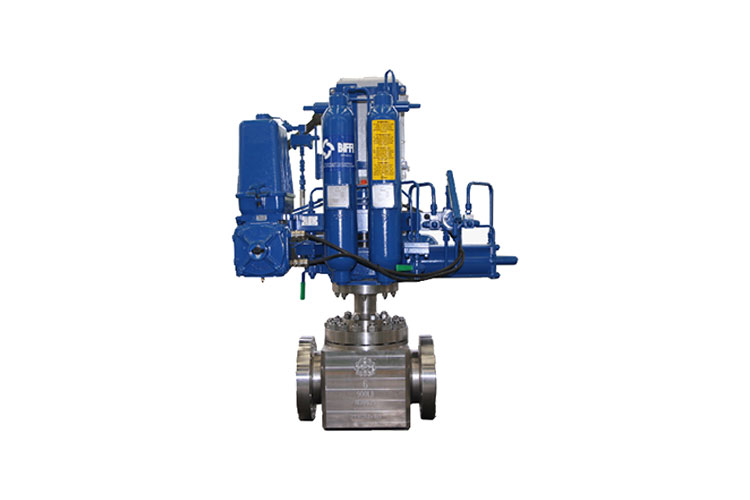
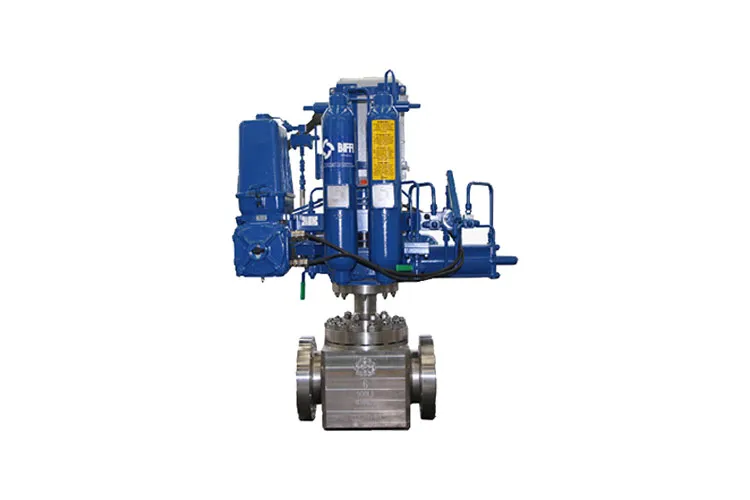
Corrosion Resistant Nickel Alloy Forged ball valve
Corrosion Resistant Nickel Alloy Forged Ball Valve is a specialty control valve forged from high-purity nickel alloys, combining the excellent corrosion resistance of nickel alloys with the structural strength advantages of forging. It is designed for highly corrosive, high-temperature, and high-pressure applications, suitable for chemical, petrochemical, and offshore engineering industries. The valve provides reliable flow control and regulation of corrosive media, with core advantages including superior corrosion resistance, robust structure, and stable sealing. It effectively addresses common issues such as valve corrosion, leakage, and shortened service life in severe corrosive environments.
Structural design focuses on corrosion resistance and forged strength:
The valve body is made of premium corrosion-resistant nickel alloys such as Monel (Monel 400/K-500), Hastelloy (C-276/C-22), or Inconel (625/825), formed by full forging. The forging process ensures high density with no porosity or sand inclusions, improving mechanical strength by over 30% compared to cast valves, and enabling long-term resistance to corrosive media and pressure surges.
The ball is made of solid forged nickel alloy from the same material as the body, solution-treated and passivated to enhance corrosion stability. The sealing surfaces are overlaid with Stellite 6 or cobalt-based hard alloy (hardness ≥ HRC60), forming a “nickel alloy substrate + wear-resistant hard seal” composite structure, providing both wear resistance and corrosion protection.
The sealing system uses a dual design of “elastic seal + metal backup.” Seats are made from reinforced PTFE or metal sealing rings, combined with an Inconel alloy spring preloading mechanism that automatically compensates for seal wear and thermal expansion. Leakage meets ANSI B16.104 Class VI standards.
The stem is forged from nickel alloy, nitrided, and sealed with dual packing of flexible graphite and PTFE, preventing leakage along the stem. Actuation options include manual, electric (smart control type), and pneumatic, suitable for various control requirements.
Key technical parameters:
Nominal sizes: DN15–DN300 (1/2"–12")
Pressure ratings: PN10–PN420 (Class 150–2500 LB)
Operating temperature range: –196 °C to 550 °C (low-temperature service for cryogenic media, high-temperature service for chemical reactions)
Corrosion resistance: Meets NACE MR0175/MR0103, suitable for pH 0–14 strong acids and bases, Cl⁻/H₂S/CO₂-containing corrosive media, and marine salt spray environments
Connections: Flanged (ASME B16.5, GB/T 9113), butt-welded, threaded; sealing surfaces support RF and RTJ types
Manufacturing and testing strictly follow API 6D, ASME B16.34, and API 598 standards. Each valve undergoes corrosion immersion tests, hydrostatic strength tests, sealing performance tests, and non-destructive inspections (UT/RT/MT) to ensure compliance with harsh service conditions.
Performance advantages:
Exceptional corrosion resistance – nickel alloy material provides broad-spectrum protection against multiple corrosive media, with a service life 5–8 times longer than standard stainless steel valves.
High structural strength – fully forged construction ensures excellent pressure and impact resistance, eliminating risks of deformation or leakage.
Reliable sealing – dual sealing and automatic compensation design ensure zero leakage under frequent operation and extreme conditions.
Applications: Suitable for chemical acid/alkali solutions, sulfur-containing petrochemical media, seawater treatment on offshore platforms, and fine chemical intermediates. Typical installations include chemical reactor inlets/outlets, petrochemical desulfurization units, offshore oil & gas pipelines, and acid/alkali storage tank outlets, serving as critical equipment to ensure stable operation in highly corrosive environments.
 RELATED
 RELATED
Contact Person:Max.Song(SongShanshan)
Title:General Manager
Mobile:+86 15611322632
Tell:+86 10 89282693
Email:international@bvmc.com
Address:No. 3, Lvhai Road, Pangezhuang Town, Daxing District, Beijing


Copyright © Beijing Valve General Factory Co., Ltd.
SitemapThis website uses cookies to ensure you get the best experience on our website.




 Phone
Phone