
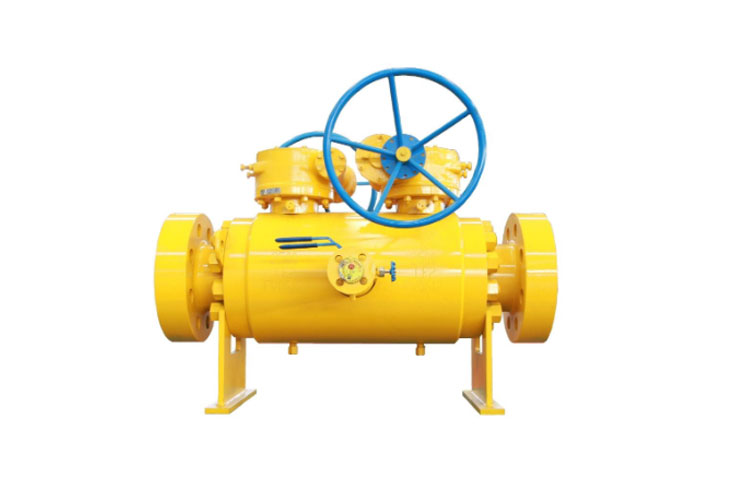
High Pressure Flanged Cast Steel DBB Valves
High pressure flanged cast steel DBB (Double Block & Bleed) valves are high-pressure control valves with dual block and bleed functionality. Featuring a cast steel body, flanged ends, and a dual-seal design, these valves are specifically designed for high-pressure applications in petrochemical and oil & gas transportation systems. A single valve can provide bidirectional isolation and intermediate cavity venting, offering core advantages of reliable sealing, high safety redundancy, and convenient operation, effectively minimizing safety risks associated with medium leakage.
The structural design focuses on high-pressure performance and dual-seal requirements. The valve body is made from high-strength materials such as WCB/WCC cast steel or WC6/WC9 chromium–molybdenum alloy steel, manufactured through integral forging or thick-wall casting. The wall thickness meets ASME B16.34 and API 6D standards, providing excellent pressure resistance and deformation resistance to withstand high-pressure medium impacts. The core consists of a dual-seat structure with an intermediate bleed channel. The upstream and downstream seats seal independently, and the intermediate cavity is equipped with a small-diameter needle valve for venting, allowing real-time monitoring of seal status and safe discharge of residual medium, achieving an integrated “dual block + bleed” function.

The stem and disc are integrated, with disc sealing surfaces overlay welded with Stellite 6 or hardfacing alloys (hardness ≥ HRC 58). The valve seats adopt floating metal hard-sealing structures with spring preloading to automatically compensate for wear and thermal deformation. Leakage performance meets ANSI B16.104 Class VI requirements. The flanged ends comply with ASME B16.5 and GB/T 9113 standards, supporting raised face (RF) and ring-type joint (RTJ) sealing surfaces for high-pressure pipeline installation.
Key technical parameters include nominal sizes from DN25 to DN300 (1"–12") and pressure ratings from PN100 to PN420 (Class 600–2500 LB), with custom high-pressure versions up to PN630. Operating temperature ranges from –29 °C to 425 °C, extendable to 550 °C with chromium–molybdenum alloy steel for high-temperature service. Flanged connections are standard, and actuation options include manual, electric, pneumatic, and gear-driven operation to meet different automation requirements. Manufacturing and testing strictly follow API 6D, ASME B16.34, and API 598 standards, including shell hydrostatic tests, dual-seal tests, bleed function tests, and non-destructive examinations (UT/RT).
In terms of performance, the valve offers three key advantages. First, dual-block safety redundancy: independent upstream and downstream sealing ensures system isolation even if one seal fails, while the intermediate bleed function facilitates troubleshooting. Second, strong high-pressure adaptability: the cast steel body and thick-wall design withstand high-pressure medium impacts reliably, with no risk of deformation or leakage. Third, convenient maintenance: flanged connections allow quick disassembly without welding, and the dual-seal structure reduces the frequency of component replacement. These valves are suitable for crude oil, natural gas, and high-pressure chemical media, and are typically applied in long-distance oil and gas pipelines, high-pressure process pipelines in refineries, and high-pressure feed systems in chemical reactors.
Contact Person:Max.Song(SongShanshan)
Title:General Manager
Mobile:+86 15611322632
Tell:+86 10 89282693
Email:international@bvmc.com
Address:No. 3, Lvhai Road, Pangezhuang Town, Daxing District, Beijing


Copyright © Beijing Valve General Factory Co., Ltd.
SitemapThis website uses cookies to ensure you get the best experience on our website.




 Phone
Phone