
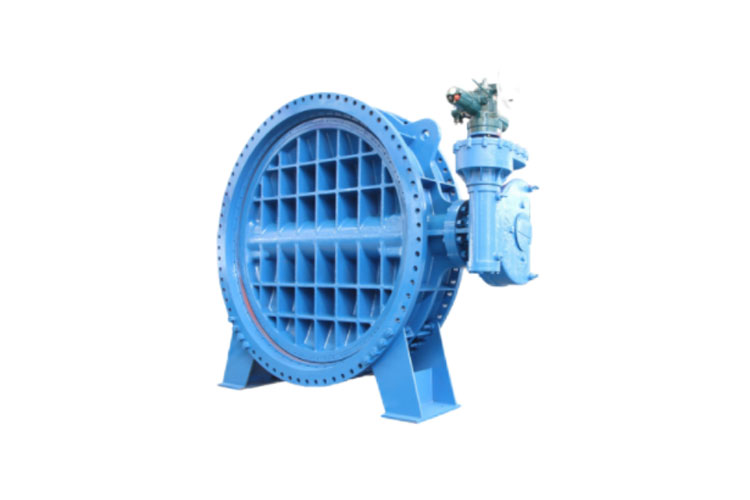
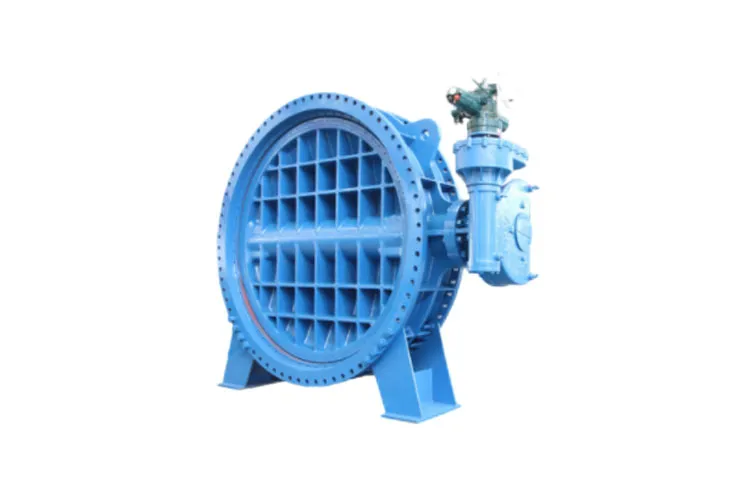
Erosion Resistant Seawater Butterfly valve
The Erosion Resistant Seawater Butterfly Valve is a specialized flow control device designed for marine engineering, coastal industries, and seawater desalination systems. Engineered to withstand the high salinity, strong corrosiveness, and particle-laden erosion characteristics of seawater, it combines excellent corrosion resistance, erosion resistance, and stable sealing performance. It is widely used in coastal power plants, seawater desalination facilities, and port dredging systems.
Core Structure and Anti-Erosion Design
The valve body and disc are manufactured from duplex stainless steel (2205, 2507), super austenitic stainless steel, or titanium alloy. These materials offer outstanding resistance to pitting and crevice corrosion in high-salinity environments. The disc sealing surface is overlaid with hard, wear-resistant materials such as tungsten carbide or Stellite alloy, achieving hardness levels above HRC 60, effectively resisting erosion caused by sand particles and shell debris present in seawater.
The valve typically adopts a triple-offset metal-seated design. During opening and closing, the disc sealing surface disengages from the seat without friction, preventing particle jamming and sealing surface damage. The seat is made of corrosion-resistant fluoroelastomer or metal materials, combined with a flexible graphite packing system and a blowout-proof stem to prevent seawater leakage along the stem. In addition, sacrificial anode cathodic protection is incorporated to mitigate electrochemical corrosion of the valve body.
Erosion Resistance and Seawater Service Advantages
Dual Resistance to Erosion and Corrosion: Hard-alloy sealing surfaces withstand continuous scouring by solid particles in seawater, while duplex stainless steel bodies offer a service life 3–5 times longer than conventional stainless steel in marine environments. The valve adapts well to complex operating conditions involving tidal variations and fluctuating seawater flow velocities.
Reliable Sealing and Leak Prevention: The metal-seated structure achieves ISO 15848-1 Class A leakage rating. The bidirectional sealing design effectively resists pressure surges in seawater pipelines, meeting zero-leakage safety requirements for marine systems. Certain models feature a fully rubber-lined design to further enhance corrosion resistance and sealing performance.
Weather Resistance and Operational Stability: The valve exterior is coated with marine-grade anti-corrosion coatings, providing resistance to salt spray and ultraviolet radiation in outdoor marine environments. Available actuation options include manual gearbox, pneumatic, and electric drives. Electric versions are equipped with moisture-proof actuators, suitable for automated control on offshore platforms and coastal pipe racks, with emergency shut-off response times of ≤2 seconds.
Easy Maintenance: The modular design allows online replacement of the seat and disc sealing surfaces without removing the valve from the pipeline. This is particularly advantageous for offshore installations where maintenance access is difficult and costly, significantly reducing downtime.
Typical Applications
Erosion-resistant seawater butterfly valves are commonly used in seawater cooling circulation systems of coastal thermal power plants, seawater desalination pretreatment pipelines, port dredging discharge lines, seawater fire-fighting systems on offshore platforms, and seawater pipeline systems associated with sea-crossing bridges.
Contact Person:Max.Song(SongShanshan)
Title:General Manager
Mobile:+86 15611322632
Tell:+86 10 89282693
Email:international@bvmc.com
Address:No. 3, Lvhai Road, Pangezhuang Town, Daxing District, Beijing


Copyright © Beijing Valve General Factory Co., Ltd.
SitemapThis website uses cookies to ensure you get the best experience on our website.




 Phone
Phone