
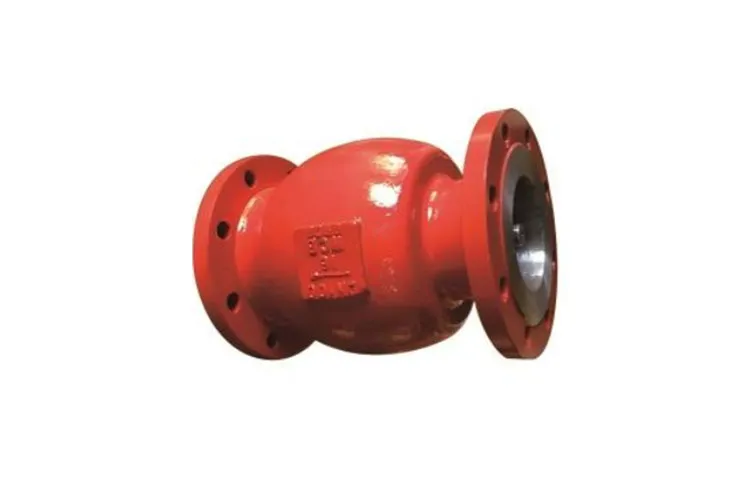
Corrosion Resistant Axial Flow Check Valve
Corrosion resistant axial flow check valves are one-way Flow Control Valves specifically designed for corrosive media. By combining an axial flow passage with corrosion-resistant materials, these valves rely on axial line pressure to drive the disc open and close. They are well suited for highly corrosive service conditions in industries such as chemical processing, pharmaceuticals, and seawater treatment. With the core advantages of low flow resistance, stable sealing, and excellent corrosion resistance, they effectively prevent reverse flow and corrosion-related valve damage.

The structural design focuses on corrosion protection and flow optimization. The valve body is made from corrosion-resistant materials such as 304/316L stainless steel, Hastelloy C-276, and Monel 400. For special service conditions, PTFE lining or ceramic coatings are applied. The body is manufactured by precision casting or forging, with smooth internal surfaces and no dead corners, preventing media accumulation and localized corrosion. The disc features a streamlined axial-flow design and is made from the same material as the body. The sealing surface is overlay welded with cobalt-based alloys or reinforced PTFE sealing layers, balancing corrosion resistance and sealing performance. Leakage rates meet ANSI B16.104 Class V requirements. The seat adopts an embedded design with an elastic preloading mechanism that automatically compensates for corrosion and wear, ensuring long-term sealing reliability. The stem and disc are integrated into a single structure, with surfaces treated by passivation or nitriding. Together with PTFE packing seals, this design prevents penetration by corrosive media. A built-in damping spring slows the closing speed of the disc, suppressing water hammer.
Key technical parameters include nominal sizes from DN25 to DN600 (1"–24"), pressure ratings from PN10 to PN250 (Class 150 to 1500 LB), and an operating temperature range of –40 °C to 280 °C. Fluoroplastic-lined versions are suitable for temperatures from –196 °C to 180 °C, while alloy material options can extend the operating temperature up to 550 °C for high-temperature corrosive service. Connection types include flanged ends (in accordance with ASME B16.5 and GB/T 9113) and butt-welded ends, making the valve compatible with various piping systems. Manufacturing and testing strictly follow standards such as API 598, GB/T 12224, and ISO 5208, including corrosion resistance testing, seat leakage tests, and non-destructive examinations.
In terms of performance, the valve offers three major advantages. First, it provides excellent corrosion resistance: the use of fully corrosion-resistant materials and lining designs enables reliable handling of strong acids, alkalis, salt solutions, and organic solvents. Second, it delivers high flow efficiency: the axial flow path and streamlined disc design result in a flow resistance coefficient of ≤ 0.3, with pressure drop approximately 40% lower than that of conventional check valves, making it ideal for high-flow applications. Third, it ensures stable operation: the damping spring and elastic sealing structure provide smooth, impact-free opening and closing, extending service life by approximately two to three times compared with standard check valves. These valves are suitable for chemical acidic and alkaline solutions, seawater desalination systems, pharmaceutical intermediates, and metallurgical pickling media. Typical applications include outlets of chemical reactors, seawater transmission pipelines, pharmaceutical process piping, and electroplating wastewater treatment systems under corrosive service conditions.
Contact Person:Max.Song(SongShanshan)
Title:General Manager
Mobile:+86 15611322632
Tell:+86 10 89282693
Email:international@bvmc.com
Address:No. 3, Lvhai Road, Pangezhuang Town, Daxing District, Beijing


Copyright © Beijing Valve General Factory Co., Ltd.
SitemapThis website uses cookies to ensure you get the best experience on our website.




 Phone
Phone