

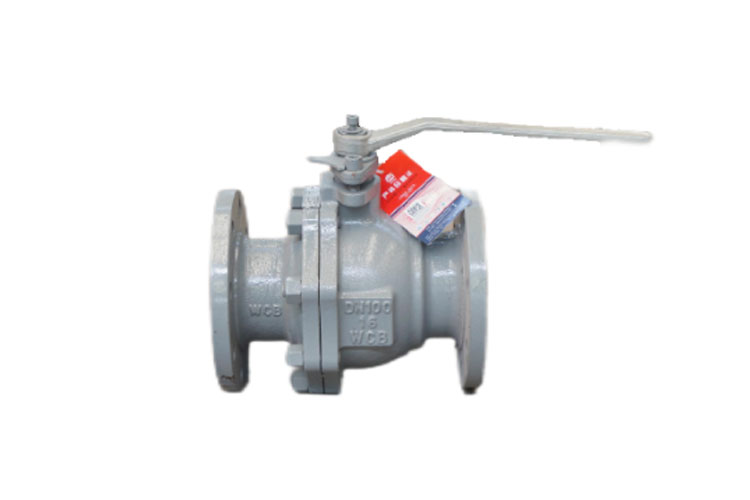
Floating Ball Physics Explained With Diagrams
Floating ball physics is a practical way to understand how a ball can remain suspended, partially supported, or visually “floating” in a fluid, airflow, magnetic field, or other controlled environment. In industrial systems, scientific demonstrations, and engineering applications, the term floating ball may refer to a ball that is stabilized by pressure, lift, buoyancy, flow velocity, or electromagnetic forces. This page explains the core principles behind floating ball physics in clear English, with SEO-friendly structure, useful definitions, tables, and diagram-style illustrations that can be inserted directly into an HTML page.
The concept is important in fluid mechanics, process control, metering, instrumentation, mechanical design, and educational physics. While different industries use different floating ball mechanisms, the underlying idea is always the same: a balance of forces keeps the ball in a stable position. By learning how these forces work, readers can better understand floating ball behavior, system performance, calibration basics, and common design considerations.
A floating ball is an object that appears to levitate, hover, or remain suspended because the forces acting on it are balanced. In many systems, the ball is not truly weightless. Instead, gravity is counteracted by a supporting force such as buoyancy, fluid drag, upward airflow, pressure differentials, or magnetic attraction and repulsion. In simple terms, the ball stays in place because the upward force equals the downward force.
Floating ball physics can be observed in water tanks, flow meters, pneumatic devices, air bearings, laboratory demonstrations, and other engineering setups. The ball’s motion is usually sensitive to changes in speed, density, pressure, temperature, and geometry. This makes floating ball systems valuable for measurement, visualization, and control.
To explain floating ball physics, it helps to understand the main forces involved. Depending on the application, one or more of the following forces may dominate:
| Force | Direction | Main Role in Floating Ball Physics |
|---|---|---|
| Gravity | Downward | Creates the ball’s weight and pulls it toward the bottom |
| Buoyancy | Upward | Supports the ball in a fluid by displaced volume |
| Drag | Opposes motion | Helps suspend the ball in moving gas or liquid |
| Pressure force | Upward or downward | Balances the ball in pressure-based floating systems |
| Magnetic force | Upward or downward | Used in controlled levitation and positioning |
| Lift | Usually upward | Generated by flow patterns and geometry |
Upward Force
-------------------
↑
│
│
( BALL )
│
│
↓
-------------------
Gravity / Weight
In a stable floating state, the total upward force equals the total downward force. If the upward force becomes greater, the ball rises. If the upward force becomes weaker, the ball falls. This simple balance is the foundation of floating ball physics.
In fluids such as water or air, floating ball behavior depends heavily on density and displacement. According to Archimedes’ principle, an object immersed in a fluid experiences an upward buoyant force equal to the weight of the fluid it displaces. If the ball is less dense than the liquid, it floats. If it is denser, it sinks. If the ball is designed to sit at a specific height in a fluid system, its effective density, shape, and surrounding fluid properties must be carefully matched.
In air or gas systems, the same idea applies, but the densities are much lower. Because gas buoyancy is usually small, floating ball systems in air often rely more on airflow, pressure, or mechanical guidance than on buoyancy alone. This is why many air-based floating ball applications use controlled flow paths and specific chamber geometries.
Top of Tube
┌───────────┐
│ ↑ │
│ ( BALL ) │
│ ↓ │
└───────────┘
Bottom of Tube
Upward fluid support balances weight
A floating ball can remain at a nearly fixed height when the system self-adjusts to changes in force. In many flow-based systems, if the ball rises too high, the channel narrows or the fluid velocity changes, reducing upward force. If the ball drops too low, the flow speed increases or the pressure distribution changes, pushing the ball back upward. This creates a natural feedback loop and improves stability.
Fixed-height floating ball behavior is often seen in variable-area flow measurement and visualization devices. The ball position acts as an indicator of flow rate, system pressure, or operating condition. Because the ball responds visibly to small changes, it is useful in both industrial and educational contexts.
| Principle | Explanation | Practical Effect |
|---|---|---|
| Force equilibrium | Upward and downward forces are equal | Ball stays suspended |
| Density matching | Relative density determines float or sink behavior | Ball remains in a stable layer or position |
| Flow control | Fluid motion changes the force on the ball | Ball position reflects system flow |
| Pressure balance | Different pressures create upward support | Ball can hover inside a chamber or tube |
| Feedback stability | The system automatically restores equilibrium | Ball position becomes self-regulating |
One of the most common applications of floating ball physics is flow measurement. In a variable-area flow meter, often called a rotameter in general terms, fluid moves upward through a tapered tube and lifts a ball or float. As flow increases, the ball rises to a point where the upward drag force and buoyancy balance the ball’s weight. The ball position then indicates the flow level.
This type of system works because the cross-sectional area changes with height. A higher ball position corresponds to a larger flow area, which changes the velocity and force balance. The result is a measurable, repeatable relationship between float height and flow rate.
Narrow Top
/
/
/
/ ○
/ ↑
/ │
/ │
/______↓_______
Wider Bottom
Ball rises as upward flow increases
Floating ball systems offer several practical advantages in engineering and measurement applications. Their design is often simple, visually intuitive, and easy to operate. Because the ball position can be seen directly, the system provides immediate feedback without complex electronics.
| Advantage | Description |
|---|---|
| Simple visual reading | The ball position can be observed directly and interpreted quickly |
| Low operating complexity | Many floating ball systems require minimal setup and maintenance |
| Real-time response | Ball movement changes immediately when system conditions change |
| Useful for control and indication | Can help show flow, pressure, or system state in real time |
| Educational value | Excellent for demonstrating buoyancy, drag, and equilibrium |
| Mechanical stability | Many designs are durable and easy to understand |
The behavior of a floating ball is influenced by multiple physical and geometric variables. Small changes in these factors can alter the ball’s position, responsiveness, and stability. Understanding these variables is essential for designing or analyzing floating ball systems.
| Factor | Effect on Floating Ball Behavior |
|---|---|
| Ball mass | Heavier balls require more upward force to stay suspended |
| Ball diameter | Changes displacement, drag, and surface area |
| Fluid density | Higher density fluids provide stronger buoyancy |
| Fluid velocity | Faster flow usually increases upward support or lift |
| Temperature | Can change fluid density and viscosity |
| Viscosity | Affects resistance, drag, and response speed |
| Tube or chamber geometry | Controls how forces are distributed around the ball |
| Surface finish | Can slightly change flow behavior and friction |
In airflow-based floating ball systems, the ball is supported by a moving stream of gas. The air velocity creates drag and pressure differences that counteract gravity. If the airflow is too weak, the ball falls. If the airflow is too strong, the ball may rise, oscillate, or be pushed out of position. The correct airflow creates a stable hover state.
This principle is often used in demonstrations showing Bernoulli-related effects, pressure zones, and fluid dynamics. However, stable floating does not depend on a single concept only. In practice, the ball is controlled by a combination of flow rate, pressure distribution, and geometry.
Air Outflow
↑
↑
┌───────┐
│ ○ │
│ ↑ │
│ / │
│ / │
└───────┘
↑
Air Inflow
Upward air velocity holds the ball in place
| Term | Meaning |
|---|---|
| Buoyancy | Upward force exerted by a fluid on an immersed object |
| Drag | Resistance force caused by fluid movement around the ball |
| Equilibrium | Condition where all forces are balanced |
| Levitation | Suspension of an object without direct mechanical support |
| Float height | Vertical position of the ball in the system |
| Stability | The ability of the ball to return to its position after disturbance |
| Flow rate | Amount of fluid moving through a system per unit time |
The following table presents common specification categories used to describe floating ball systems in general industrial or technical contexts. Exact values vary by design and application.
| Specification Category | Typical Range or Description |
|---|---|
| Ball material | Glass, plastic, metal, ceramic, or composite materials |
| Ball size | Small to medium diameters depending on chamber design |
| Operating medium | Air, gas, water, or other process fluid |
| Operating principle | Buoyancy, drag, pressure balance, or magnetic support |
| Measurement output | Visual position, scale reading, or sensor-based output |
| Mounting style | Vertical tube, enclosed chamber, or guided housing |
| Stability method | Geometry, flow feedback, or active control |
Floating ball physics appears in many technical and educational environments. It is used wherever a stable, visible, and responsive suspended object can help indicate a physical condition or demonstrate a scientific concept.
A stable floating ball design depends on consistent force balance and predictable fluid behavior. Engineers often improve stability by refining tube shape, controlling flow uniformity, selecting appropriate ball density, and minimizing unwanted turbulence. A smoother path for the fluid typically improves repeatability and reduces ball oscillation.
Additional ways to improve stability include reducing vibration, ensuring vertical alignment, avoiding sharp edges, and maintaining clean internal surfaces. These measures help the ball respond more accurately to changes in the system.
Stable Position
○
│
----- │ -----
Disturbed Position
○
/│
│
----- │ -----
Restoring Force Returns Ball
○
│
----- │ -----
| Problem | Possible Cause | Common Effect |
|---|---|---|
| Ball chatter | Turbulence or unstable flow | Ball vibrates or moves erratically |
| Sticking | Surface contamination or poor geometry | Ball does not move freely |
| Incorrect reading | Calibration mismatch or fluid variation | Position does not reflect actual condition |
| Over-rising | Excess flow or pressure | Ball moves above the intended range |
| Dropping | Insufficient force support | Ball falls below the stable zone |
Floating ball physics explained with diagrams is a useful topic for readers searching for clear definitions of floating ball behavior, buoyancy, fluid dynamics, airflow suspension, and force balance. The floating ball principle is based on equilibrium between upward and downward forces. In practical systems, this equilibrium may come from fluid displacement, drag, pressure, or magnetic support. Because floating ball systems are visual, stable, and easy to interpret, they remain valuable in engineering, measurement, education, and process monitoring.
For anyone researching floating ball physics, the most important ideas are simple: understand the forces, understand the medium, and understand how geometry affects movement. Once these concepts are clear, floating ball behavior becomes easy to explain and easy to apply in technical content, blog articles, directory pages, and industry information pages.
Floating ball physics, floating ball explained, floating ball with diagrams, buoyancy principle, fluid dynamics, airflow suspension, force balance, stable levitation, floating ball system, variable area flow meter, ball float mechanism, pressure balance, drag force, educational physics.
Contact Person:Max.Song(SongShanshan)
Title:General Manager
Mobile:+86 15611322632
Tell:+86 10 89282693
Email:international@bvmc.com
Address:No. 3, Lvhai Road, Pangezhuang Town, Daxing District, Beijing


Copyright © Beijing Valve General Factory Co., Ltd.
SitemapThis website uses cookies to ensure you get the best experience on our website.




 Phone