
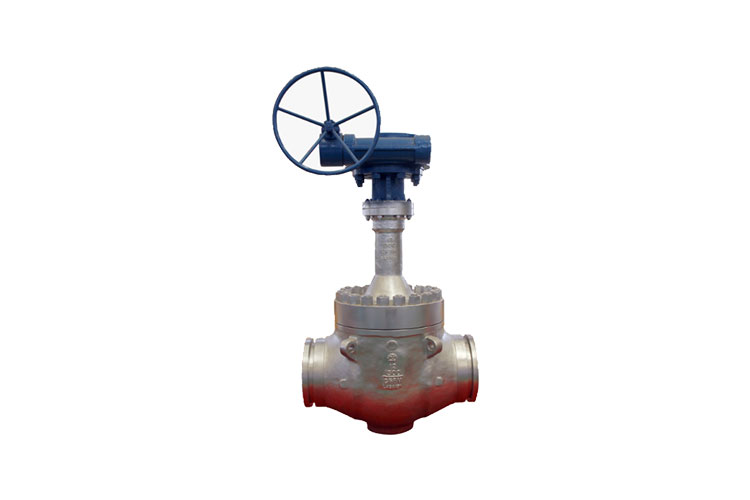
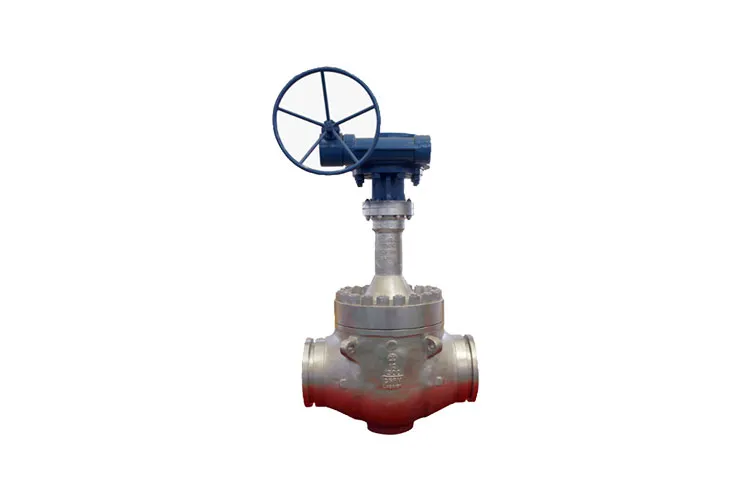
Chemical Cryogenic Gate Valve is a specialty control valve designed for chemical cryogenic applications. It combines deep-cryogenic corrosion-resistant materials, a wedge gate structure, and precision sealing technology, making it suitable for chemical cryogenic reactions, low-temperature medium storage, and transfer systems. It ensures reliable flow control and system isolation under extreme low temperatures and corrosive environments, with core advantages including resistance to cold-induced brittle fracture, corrosion and wear resistance, and stable sealing. It effectively addresses common issues in chemical cryogenic service, such as valve jamming, corrosion-induced leakage, and seal failure.
Structural design focuses on chemical cryogenic adaptability:
The valve body is made of 316L ultra-low carbon stainless steel, Hastelloy C-276, or Monel 400, processed with –196 °C cryogenic aging and stress-relief treatment to eliminate internal stresses and prevent brittle fracture or corrosion-induced deformation.
The wedge gate structure (wedge angle 3°–5°) automatically compensates for thermal contraction and wear at low temperatures. The gate is solid forged and solution-treated, with sealing surfaces overlaid with Stellite 6 or cobalt-based hard alloy (hardness ≥ HRC58), providing excellent resistance to chemical corrosion and erosion.
The sealing system uses a dual structure of “low-temperature elastic seal + metal hard seal.” Seats are made of PCTFE or glass-fiber-reinforced PTFE designed for cryogenic service, combined with an Inconel alloy spring preloading mechanism to automatically compensate for seal wear. Leakage meets ANSI B16.104 Class V standards.
The stem is made from the same corrosion-resistant material as the body, nitrided, and sealed with dual packing of flexible graphite and PTFE, ensuring zero leakage under cryogenic and corrosive conditions. Actuation options include manual, electric (low-temperature explosion-proof), and gear-driven operation.
Key technical parameters:
Nominal sizes: DN25–DN400 (1"–16")
Pressure ratings: PN10–PN250 (Class 150–1500 LB)
Operating temperature range: –196 °C to –40 °C; special materials can extend to –253 °C for liquid hydrogen service
Corrosion resistance: Meets NACE MR0175 standard, suitable for pH 1–14 acid/alkaline media and Cl⁻/H₂S/CO₂-containing corrosive media
Connections: Flanged (ASME B16.5, GB/T 9113) or butt-welded; sealing surfaces support RF and RTJ types
Manufacturing and testing strictly follow API 6D, ASME B16.34, and GB/T 24925 (low-temperature valve standards), including cryogenic impact testing, corrosion resistance testing, sealing performance testing, and non-destructive examinations (UT/RT).
Performance advantages:
Strong cryogenic adaptability – materials and structure optimized for deep cryogenic service, preventing jamming or brittle fracture.
Durable corrosion-resistant sealing – corrosion-resistant materials combined with dual sealing design, compatible with multi-component chemical media.
High flow efficiency – full-bore design minimizes flow resistance and pressure drop, facilitating low-temperature medium transfer.
Applications: Suitable for chemical cryogenic reactors, low-temperature chemical feedstock transfer, LNG chemical units, and low-temperature piping in air separation equipment. Typical installations include cryogenic chemical units, low-temperature storage tank outlets, low-temperature chemical distillation pipelines, and liquid nitrogen/liquid oxygen transfer systems.
 RELATED
 RELATED
Contact Person:Max.Song(SongShanshan)
Title:General Manager
Mobile:+86 15611322632
Tell:+86 10 89282693
Email:international@bvmc.com
Address:No. 3, Lvhai Road, Pangezhuang Town, Daxing District, Beijing


Copyright © Beijing Valve General Factory Co., Ltd.
SitemapThis website uses cookies to ensure you get the best experience on our website.




 Phone
Phone