
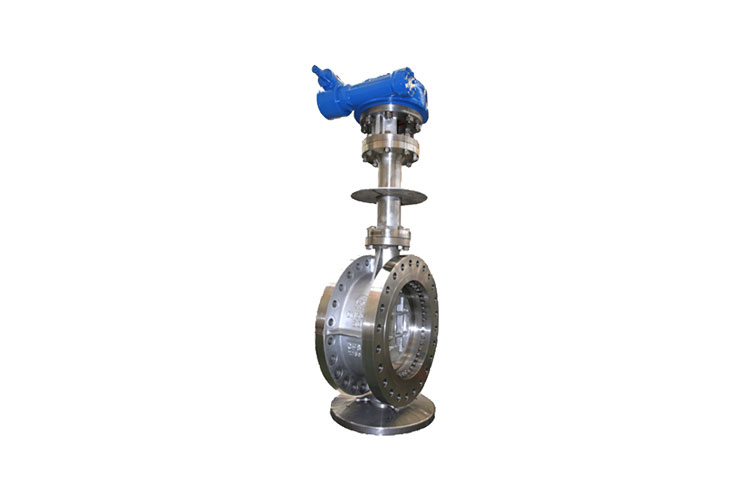
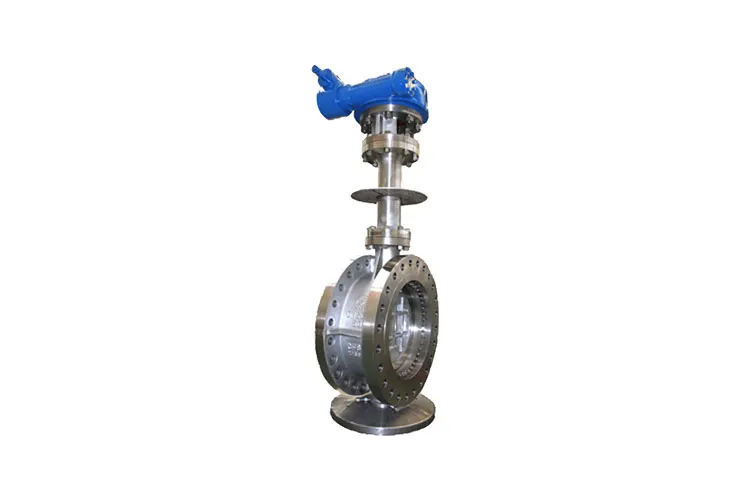
Cold Resistant Floating Cryogenic Butterfly valve
Cold Resistant Floating Cryogenic Butterfly Valve is a floating-type control valve specifically designed for low-temperature environments. It combines cold-resistant materials and processes with Floating ball self-adaptive sealing technology, making it suitable for LNG, air separation, cold chain logistics, and other industries. It ensures reliable flow control under extreme low temperatures, with core advantages including resistance to cold-induced brittle fracture, self-adaptive sealing, and flexible operation. It effectively addresses common low-temperature valve issues such as seal failure and sticking during opening/closing.
Structural design focuses on cold resistance and floating seal adaptability:
The valve body is made from 304L/316L ultra-low carbon stainless steel or Monel 400, processed with –196 °C cryogenic aging and stress-relief treatments to eliminate internal stresses and prevent brittle fracture or deformation at low temperatures. The valve features a floating ball design, where the ball automatically presses against the seat under media pressure, achieving self-adaptive sealing. The ball is solution-treated to enhance low-temperature stability, and the sealing surface is overlaid with Stellite 6 or cobalt-based hard alloy (hardness ≥ HRC58) for excellent wear resistance and cold corrosion resistance.
The sealing system uses a dual structure of “low-temperature elastic seal + metal backup.” Seats are made of PCTFE or glass-fiber-reinforced PTFE, combined with Inconel alloy spring preloading to automatically compensate for thermal contraction and wear. Leakage meets ANSI B16.104 Class VI standards. The stem is made of 2Cr13 stainless steel with nitriding treatment, combined with dual sealing using flexible graphite and braided metal packing, ensuring zero leakage in low-temperature environments. Actuation options include manual, electric (low-temperature explosion-proof), and pneumatic drives.
Key technical parameters:
Nominal sizes: DN15–DN300 (1/2"–12")
Pressure ratings: PN10–PN250 (Class 150–1500 LB)
Operating temperature range: –196 °C to –40 °C (suitable for LNG, liquid nitrogen), with special materials extending to –253 °C for liquid hydrogen service
Cold-resistance rating: Meets GB/T 24925 standard, low-temperature impact energy ≥ 27 J at –196 °C
Connections: Flanged (ASME B16.5, GB/T 9113) and butt-welded; sealing surfaces support RF and RTJ types
Manufacturing and testing strictly follow API 6D, ASME B16.34, and GB/T 24925 standards, including cryogenic impact tests, sealing performance tests, low-temperature operation tests, and non-destructive examinations (UT/RT).
Performance advantages:
Strong cold-resistance – cryogenic-treated materials and optimized structure prevent brittle fracture and sticking at low temperatures.
Self-adaptive sealing – the floating ball presses against the seat under media pressure, improving sealing reliability as pressure increases.
Easy operation – the floating design reduces opening/closing torque, enabling smooth operation even at low temperatures.
Applications: Suitable for LNG storage and transport, air separation liquid oxygen/liquid nitrogen systems, and cold chain logistics. Typical installations include LNG receiving stations, air separation units, low-temperature tank outlets, and liquid nitrogen pipelines in low-temperature environments.
Contact Person:Max.Song(SongShanshan)
Title:General Manager
Mobile:+86 15611322632
Tell:+86 10 89282693
Email:international@bvmc.com
Address:No. 3, Lvhai Road, Pangezhuang Town, Daxing District, Beijing


Copyright © Beijing Valve General Factory Co., Ltd.
SitemapThis website uses cookies to ensure you get the best experience on our website.




 Phone
Phone